Bedtime Routines

Bedtime routines are essential for getting the appropriate amount of sleep each night. Lack of sleep within children can disrupt the important cycles their bodies go through to help with development, attention and so much more. Creating a bedtime routine doesn’t have to be difficult, just utilize these tips and your child will be snoozing in no time.  

Consistency

Whichever tip you decide to implement, the most important is consistency. Providing a predictable bedtime routine that is consistent allows your child to understand the sequence of events that lead up to the point of going to sleep. Utilizing verbal reminders, prompts or a visual schedule of the tasks that need to be completed before bed, help with active engagement as well as relieving anxiety. 


Calm Down Time

Relaxation is an important step in falling asleep. Provide a time before bed where your child is away from alerting stimuli like a TV, iPad, or phone screen. Reading books, picking up toys, or listening to calming music is much more appropriate for a bedtime routine. 


Meditation

Meditation is a great way to clear the mind to decrease anxiety before going to sleep. Here are some examples to implement within your bedtime routine:

  • Deep breathing
  • Progressive muscle relaxation
  • Guided imagery


Environmental Changes

Changes to your child’s sleep environment is an easy and great way to make your child comfortable enough to fall asleep and stay asleep.

  • Weighted blanket/compression sheets: Utilizing a weighted blanket or compression sheets can provide the proprioceptive input children crave as they sleep. This simple change can decrease anxiety and provide a calming effect to better facilitate a good night’s sleep. 
  • Light level: Utilize curtains to block out light. A dark room helps the body recognize that it is time to sleep.
  • White noise: Static noise can block out other sounds within the environment that may be disruptive.
  • Soothing Scents: Scents like lavender or other calming smells can help relax your child before bedtime. 


If your child has difficulty following a bedtime routine or has continued trouble falling asleep, please do not hesitate to contact the office at BDI Playhouse Children’s Therapy to receive a free occupational therapy screening

Written by Kiersten Robertson, MOT, OTR/L

Holidays

Thriving, Not Just Surviving, The Holidays

During this time of the year, a lot is going on so it is natural for kids to be overwhelmed and act out! If you plan on having a family gathering that involves new smells, loud voices, or too many sights; try some of these tips to help your kiddo out.


Social Stories

Reading a social story about what will happen during your next holiday event is a great way to prepare your child. 

  • You can make the social story together! Have your child color in pictures or have them make their own to go along with the story. 


Give Them a Job

Having a specific job during the holiday season can help make your child feel needed or important. Some ideas include: 

  • Setting the table
  • Helping with the cooking process for a dish or two
  • Cleaning up (bring dishes to the sink, dry dishes or even help wash)
  • Bring used napkins and dish cloths to the laundry room
  • Put away the dishes
  • Write down what family members want for dessert 


Calming Space

Provide a quiet space for your child to go when upset or overwhelmed. Go over calming strategies to use when in your calming space. 

  • Build a blanket fort together or use a tent as a place to go.
  • Put calming items inside like a stuffed animal, calming music, putty, a fidget, some coloring supplies, or any other favorite calming tools
  • Explain to your child that this is a place to go if you need to calm your body, but after you are calm you can come back out. 


Practice Beforehand

Practice, practice, practice! Talk about the different strategies provided or come up with your own before the event and leading up to it! Have your child practice smelling or trying the new foods that will be made for the gathering, make this fun-they can sniff it, lick it, eat it or even play with it! Try coming up with topics to talk about at the table, this can help with attention and social interaction skills.  

Holiday gatherings can be overwhelming but thankfully there are tools to help guide you through to make this experience enjoyable for all! If you still have challenges after trying some of these strategies, contact the office at BDI Playhouse Children’s Therapy to receive a free screen, or check the website at https://bdiplayhouse.com/free-screenings/


Written By Kiersten Robertson, MOT, OTR/L
 

Elbow

Hypermobility in Children

What is Hypermobility?

Hypermobility is a term used to describe joints that move more than normal and can place the joints in increased stress.  

How can Hypermobility affect my child?

Risk of Injury

Increased joint movement can cause joints, ligaments, and tendons to be at higher risk of injury.  Joints are less stable and can strain all the structures attempting to make the joint more stable.  In addition to joints moving more than normal the signals to the brain about where the body is in space can be impaired due to the ligaments requiring increased stretch before the message is sent to the brain making it harder for children to know where they are in space and making it harder for them to correct the joint position prior to exposure to extremes of  range of motion.  


What are the common signs of hypermobility in children?

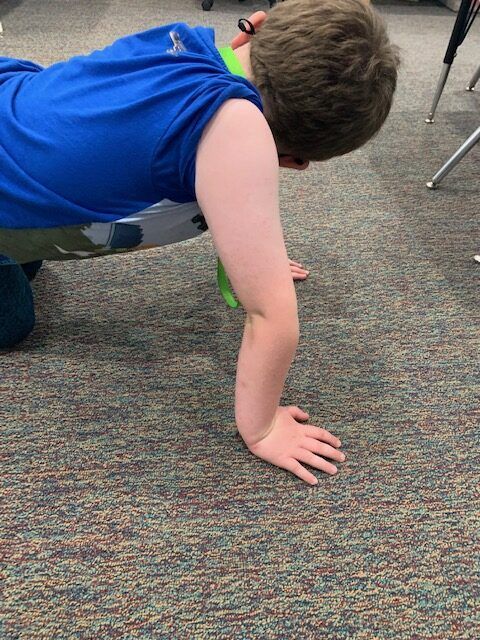
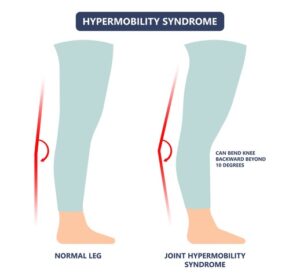
Knee HyperextensionElbow HyperextensionHands to the Floor with

Straight Knees

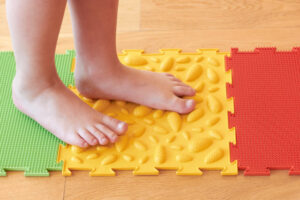
Flat Feet
ELBOWHands to floorflat feet

NOTE: These are all postures that can occur in typically developing children with no cause for concern.  However, when multiple joints are impacted and your child twists their ankles or knees frequently, or reports leg pain this may be a sign to follow-up with your physician. 

Who can help my child?

BDI Pediatric Physical Therapists create a strengthening and proprioception program that can improve your child’s participation in recreational activities as well as lower their risk of injuries. Exercises consist of 

  • strengthening the muscles around the joints
  • working on postural control
  • sport specific training 


Next Steps

Do you think your child is at risk for injury due to hypermobility?  Schedule a free screening with one of our pediatric physical therapists.  When hypermobility is identified and treated with a proper development regimen, your child will report less pain, improve balance, strength, and functional performance.  In addition, your child can prevent future pain. 

Written by: Lisa M. Wood, PT, DPT

Girl refusing tomato

Feeding Fiasco

For some families, meal time can be the most challenging part of the day. Parenting a child who is having difficulty with eating can be tough for the entire family! Some kids are picky for a short time, or avoid only a few specific foods, and some kids may outgrow a food challenge. Some children maintain a difficult relationship with food for an extended period of time, seem to be regressing in skill, or make meal time a complete disaster with no end in sight. 

The Battle Field

When the preparation of food, the presentation of food, and/or the act of coming to the table is just the beginning of the mealtime battle, getting your child to eat nutritious and delicious food can be tough. If you are having to frequently pull out your sword and shield in preparation for a mealtime battle, it’s time to seek help from feeding therapists!

Too Tiny

If your child’s eating is impacting their growth, or your child is requiring supplements for weight or growth, our therapists can assist in food expansion strategies to enhance your child’s food intake and overall well being. 

  • Flee the Scene

Some children are overwhelmed by specific foods or the mealtime experience and will run away. Others require parents to strap them in, bribe them, pull out the tablet, or chase them down just to get to the table. If your child is having trouble coming to or staying at the table, feeding therapists can help make food more approachable, assist in attention enhancement, and provide strategies to remain at the table for the entire meal!

  • Tantrum Time 

When your dinner is thrown on the floor, smeared on the table, or screamed about in protest, your little one is struggling with food. Anxiety and frustration look different on each child, and tantrums can be one of the many responses to complex feelings food may be causing. Your therapist can help determine what abilities your child is struggling with that make the meal so difficult, and assist in developing skills to engage in meals and manage big emotions throughout the eating process.

  • The Picky Eater

A child is defined as being a “picky eater” when their food intake/variety is limited, but they are able to eat 30 or more food items. This number includes being able to eat the same food item prepared in a variety of ways! A picky eater may avoid an entire food group, or limit foods to a specific consistency or flavor. A feeding therapist can help picky eaters develop a meaningful relationship with their food and help the number and types of food accepted increase.

  • The Problem Feeder

A “problem feeder” is a child that eats 20 foods or less. This child may be brand specific in the foods they tolerate, they may have eliminated entire food groups, or they may avoid all foods that are a specific color, texture or consistency. Problem feeders may have underlying difficulty with oral motor or sensory processing skills resulting in gagging/vomiting, choking, coughing, or drooling. Our therapists are trained to assist in assessing the areas of challenge and increase the types of foods a child is eating to improve their nutritional intake and overall health/wellness.

  • Social Skills Suffer

Eating is a social activity. Families and friends sit down to share a meal, go out to eat meals together, bond over coffee dates, celebrate milestones with food, and more! If a child is having difficulty remaining at the table or tolerating being around others eating food, a feeding therapist can step in before social skills and meaningful events are impacted!

If your child falls into any of the above categories, bring your worries to BDI Playhouse feeding therapists! Set up a free consultation to get more information, and put your worries to rest!

Written by: Maggie Lord, MS, OTR/L

Potty Accidents

Potty Accidents

Why is my child having potty accidents?

Potty accidents aren’t fun for anyone. It can impact a child’s relationships with their family and friends.  Here are 5 common reasons children have accidents

Constipation 

Chronic constipation is the main cause of pee and poop accidents in children that have been potty trained. This is a great handout to see if your child has any of the main signs of constipation. Did you know that pooping every day doesn’t mean they aren’t constipated? “The Poo in You” is a video with a great explanation of what happens inside the body. 

Lack of Awareness 

Many kids may not have any idea that they have to go. They may not realize that they have to use the bathroom until it’s too late, or until they’ve already gone. Knowing what is happening inside the body can be a hard concept for kids with difficulty with sensory awareness. 

Poor Potty Posture 

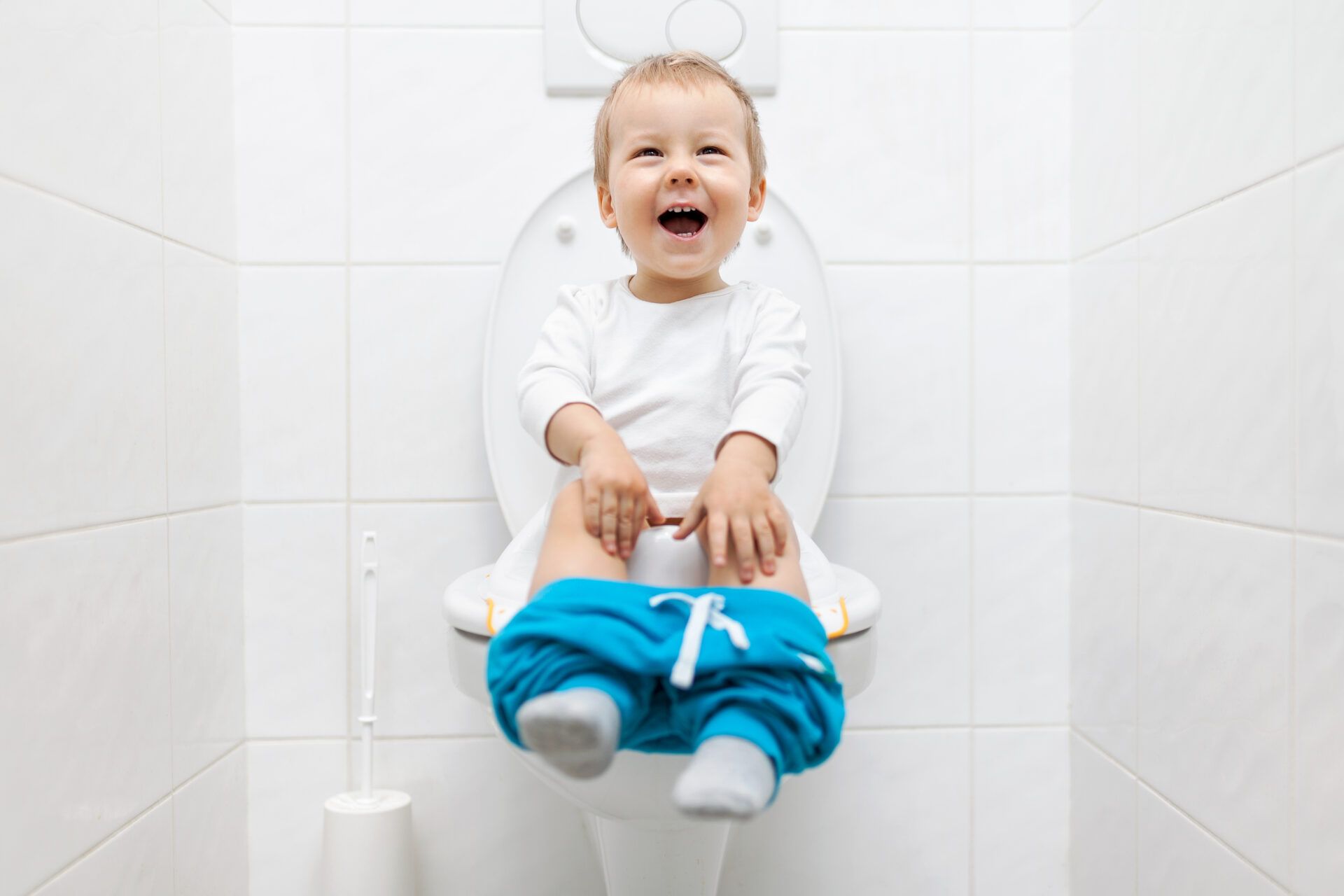
Poor potty posture makes it hard to clear out the bladder and bowels. The Squatty Potty  or other step stool helps support the feet which lets the pelvic floor muscles relax. Therapists can also help with postural awareness and strength to help with the proper potty posture for successful toileting.

Scary Bathrooms

The bathroom can be a scary place for kids! Sitting with dangling feet, the noise, and the smell can all make kids avoid the potty. Many children avoid public bathrooms because of these fears. 

Medical Reasons

There could be a medical reason your child is having accidents. If you have concerns about your child’s accidents talk to your pediatrician. They can help decide if a referral to gastroenterology or urology is needed.


Who can help my child?

If you think your child might have constipation or is struggling with accidents, please reach out for a free screening! Sometimes, you may need the help of a physical, speech, or occupational therapist to help identify the reasons for your child’s accidents and/or constipation. 

Pediatric Therapists

Therapists trained in pediatric incontinence can provide treatment with:

    • Core strengthening
    • Biofeedback
    • Bladder re-training
    • Behavior and diet strategies
    • Body awareness to help realize the urge to go 
    • Posture training
    • Increasing fiber rich food intake 
    • Increasing variety of foods
Halloween

Halloween Activity

Happy Halloween month! At BDI, the therapists have been incorporating Halloween vocabulary throughout their sessions!  This simple activity of stickers and real image vocabulary card can be used to target all different areas of communication, fine motor skills, and visual processing.  Targeting holiday specific vocabulary can help your child communicate in their community.  Why?  Because our kiddos are seeing Halloween items everywhere (i.e pumpkins on walks in their neighborhood to spooky spider displays at the grocery store)!   The following are examples of ways to achieve different developmental goals by using the same activity.

Halloween Bingo

Matching

Starting out, simply matching the animated sticker to the real image is a perfect way to help teach reality vs. fantasy and to make sure the child isn’t just memorizing one specific image!

Imitation

The child imitates the vocabulary word and receives the sticker to mark as “complete”.

Independent labeling

The child labels the Halloween card or sticker independently

Receptive identification

If your child is a great talker but needs to work on his/her listening skills, you can ask your child questions!  For example, you can ask your child “where is the cat?” or “which one is round and orange?”.  Columns or rows can be covered to reduce the amount of items he or she is scanning.

Image description

After basic labeling is mastered, you can have your child be more descriptive with their request.  The child can request the “black cat” sticker, “scary spider”, “two bats”, “silly pumpkin” etc.

Simple requesting

“I want + vocabulary word” or “Can I have + vocabulary word”

Complex requesting

“I want the purple hat”; “I want the scary ghost”

Articulation

Try finding all the final /t/ sounds in these fun Halloween words!

Are you looking for more ideas on how to make every day activities a little more festive?  Join our Talk and Groove class to learn about more ways to help your child develop their language and fine motor skills at home!

Introducing foods to baby

Introducing Foods to Babies

Introducing foods to your baby is an exciting time!  You have your highchair and your pediatrician’s green light to introduce solids.  As you start out on this food filled adventure, here are a few ideas to keep in mind!   

Expression is Everything 

  • When you are introducing foods to your baby, make sure you share the same facial expression/excitement for each food, no matter how YOU feel about that food.  Your baby is extremely observant and will notice your dislike before it even hits his/her lips!  


Not for Nutrition 

  • Whether you choose to go the BLW or puree route, your purpose should be about exposure and experiences with food, not quantity or nutrition.  This is the time your baby is learning how to eat and experiencing new tastes and textures.  If, after a few bites, your baby indicates he/she doesn’t want anymore, let your baby be done!  You want your baby to ENJOY this experience so he/she will want to do it again and again!


Messy Mayhem

  • Put down the towel!  The messier your baby gets now, the less likely they will become overly sensitive to food spills (on his/her body or surroundings).  As your child’s feeding skills progress, the messes will naturally decrease!
  • Did you know that the sippy cup is the same oral motor pattern as drinking from a bottle/breast?  It was invented with the sole purpose of reducing spills.  When introducing the “next step” to an infant, we should be introducing the straw and open cup!   

If your baby is having difficulty transitioning to solids, BDI Playhouse Children’s Therapy offers free screenings to give you the tools to help your baby “eat” their way to a healthy toddlerhood.

Written by: Jessica Keenan, MA, CCC-SLP/L, CLC

Infant Massage

Infant Massage

Benefits of Infant Massage

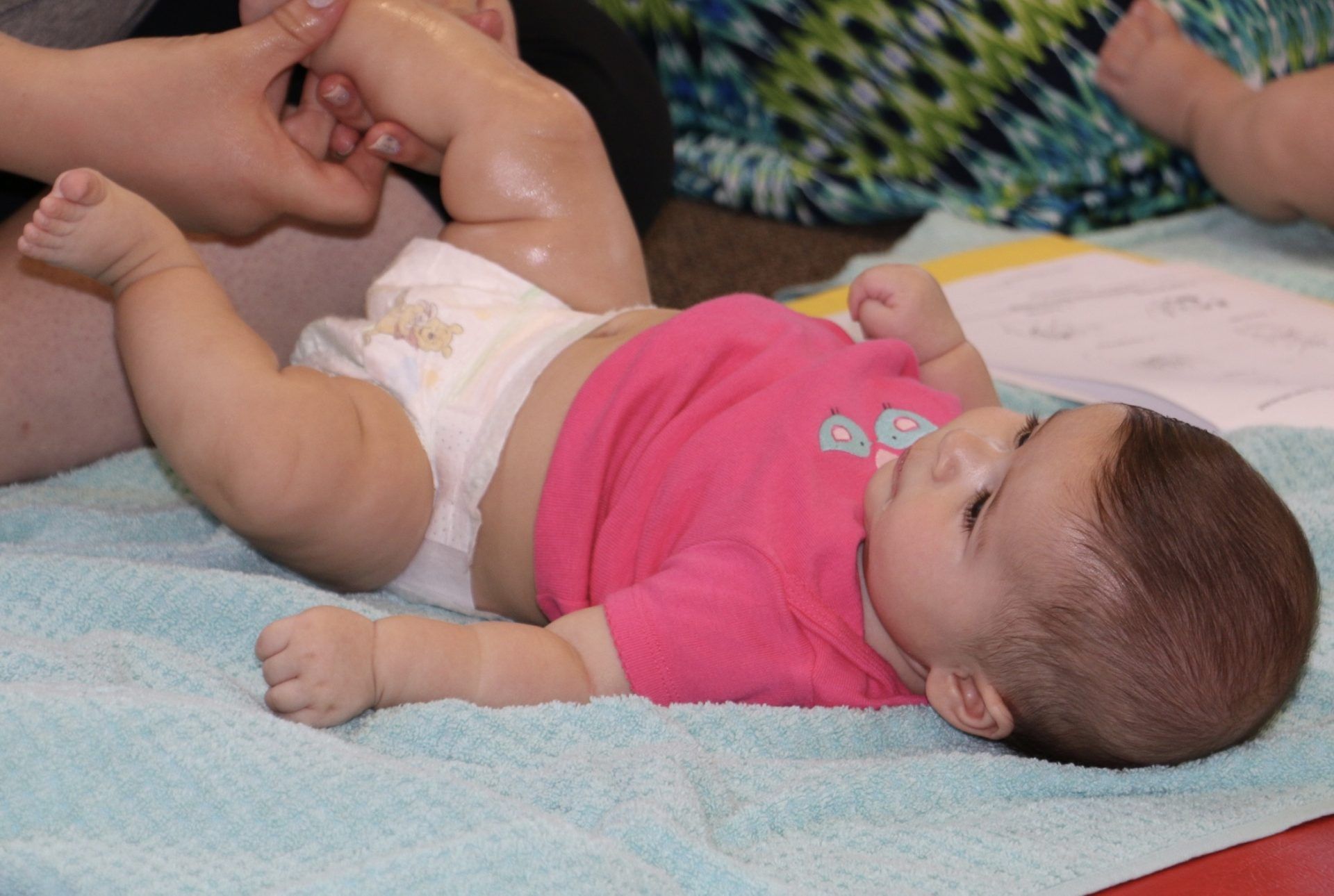
Massage has benefits at any age, but for babies it can be extra helpful! The best time to massage your baby is when they are awake, but alert. It doesn’t have to last long to get these benefits. You don’t need much, a comfortable room, something soft to place baby on, and some oil (here are some suggestions to pick out what works for you)!

Improved development 

Massage can improve circulation, improve muscle tone, and provide increased awareness of a baby’s body parts. It’s also a great time to talk to your baby which will help their speech and language.

Improved sleep

Daily massage can help babies build tolerance to handling and different input. This can help them learn to calm and relax their bodies on their own which can help them The relaxation linked to massage can help baby fall asleep on their own. 

Improved digestion

Babies occasionally experience difficulties with pooping or have increased gas. There are specific massage techniques that can help move gas bubbles and poop along. 

Parent and child bonding

Massage is a great way for parents, caregivers, and grandparents to bond with their baby. Babies respond differently to different strokes. It’s a great way for parents to pick up on the babies cues. It’s also a great excuse to get some 1:1 quiet time with baby. What a great way to break up that witching hour!

Improved body awareness

Body awareness helps babies start interacting with their environment. They get input when they recieve massage. This can help improve their awareness of where their body is in their environment. If your baby has a preference for using one side more than the other it can be a great way to help them be more aware of the side they don’t use as much


If you would like to learn how to massage your baby , BDI Playhouse offers Infant Massage classes in clinic and virtually. Trained therapists will help you find the best way to ready your baby’s unique cues to get the most out of massage! 


 Written By: Andrea Turnell, PT, DPT


w sit example

W Sitting Alternatives

W Sitting.  Why do children W sit? Simply, because it’s easy! Kids like W sitting because it creates a large base of support like a pyramid. 

Why do we want to correct the W sitting? 

  • W sitting allows kids to sit and play by using very little core muscles.
  • It prevents trunk rotation. Trunk rotation strengthens the muscles necessary for typical movement. 
  • This posture discourages the use of midline hand crossing with play.  Movements that cross our midline improves communication with both sides of the brain and eventually help develop a dominant hand. 
  • If your child has a diagnosis that causes high or low tone it is important to discourage W sitting to improve their postural control and prevent muscle inbalances.  

5 alternative ways to sit on the floor!

criss cross sitting

  1. Criss Cross. Sometimes referred to criss cross applesauce.  While W sitting discourages trunk rotation and midline crossing, criss cross legs do just the opposite! The legs are crossed through midline and does not restrict trunk rotation. 
  2. Side SittingEncourage side sitting on both the left and right side to stretch and strengthen their core muscles. 
  3. Kneeling and Tall kneeling.  Children who kneel will also move in and out of tall kneeling or standing on their knees. Try putting legos on the floor next to a coffee table to encourage kneeling to tall kneeling to improve leg, hip and core strength!
  4. Tummy Time.  Tummy time is not just for infants. We should always encourage our kids and to get back to our bellies to improve our back strength and head posture. 
  5. Wiggle seats.  Balance pads are great for kids to sit on for added cushion and improve trunk stability. It also helps with our sensory kids who love to move. https://www.amazon.com/s?k=child%27s+wiggle+seat&i=sporting&ref=nb_sb_noss


Sitting in a variety of positions is helpful to strengthen different muscles that support our child’s whole body. Poor posture can limit our child’s attention, dexterity, vision, digestion, participation, and so much more! So fix those legs!

If you notice your child is resistant to moving out of W sitting or has other postural deficits that you are concerned about, BDI Playhouse offers free screenings https://bdiplayhouse.com/physical-therapy/ and we can help with strategies for core strength, postural alignment and trunk stability.  


Written by Dana Bukala, PTA


School set up

Successful Classroom Set-up

Classroom setup is more important than ever. A properly set-up room can increase focus, increase a student’s ability to sit still, and even decrease problem behaviors.

1. Less is best

The first step to a successful classroom is embracing “less is best”.  A crowded classroom can cause over stimulation. This can cause challenges with attention or following directions. When too many visuals are placed on the walls of a classroom, students can become easily distracted. Start by simplifying the classroom. Use uniform colors.  Place limited posters on the wall. If educational posters are a must, it is important to keep those areas defined by placing similar visuals together towards the back of the room.


2. Dynamic seating

Noticing students having challenges with sitting still? Alternative seating options provide an opportunity to increase self-regulation, attention, and productivity within the classroom. Offering flexible seating choices, allows teachers to enhance their learning environment while providing control and comfort for students.  Here are a few dynamic seating options:

Besides utilizing dynamic seating options, it is important to make sure their current desk and chair fit. Make sure both feet can touch the ground.  The desk height needs to allow their arms and hands to rest on top. 


3. Organization

Another tip is maximizing organization.  Organization is key within a classroom learning environment. Messy desks or a cluttered space  causes difficulty focusing or turning work in on time. Desks should hold limited supplies and should be cleaned out regularly. Color coded folders for certain assignments or subjects can be utilized as a visual to increase task engagement, participation, and attention. Organizing the room in a way where students know where items are, by utilizing labels is a great way to assist with independence in the classroom.


4. Lighting

The next step to consider is utilizing natural lighting.  Natural lighting has benefits for attention and task engagement. Bright fluorescent lights can cause distractibility, discomfort, and decreased regulation. If natural lighting is not an option, utilize a cozy shade or fluorescent light filters during classroom set up is a great way to enhance regulation within the learning environment.


5. Visual boundaries

Finally, the last recommendation is using visual boundaries within the classroom. Doing so can provide order and success within the learning environment.  They are helpful for students who have difficulty with spatial awareness, eloping, or other difficult behaviors.  Utilizing painters tape on the floor to set the boundaries for a play area or a reading space is a great way to help with task engagement and to decrease roaming around the room during center time. 

If you notice a student or child who still has challenges with attention, self-regulation, or organization within the classroom even after implementing these strategies, BDI Playhouse offers free screenings and can help improve executive functioning skills, task engagement, and participation.


 Written By: Kiersten Robertson, MOT, OTR/L