
What is Hypermobility?
Hypermobility is a term used to describe joints that move more than normal and can place the joints in increased stress.
How can Hypermobility affect my child?
Risk of Injury
Increased joint movement can cause joints, ligaments, and tendons to be at higher risk of injury. Joints are less stable and can strain all the structures attempting to make the joint more stable. In addition to joints moving more than normal the signals to the brain about where the body is in space can be impaired due to the ligaments requiring increased stretch before the message is sent to the brain making it harder for children to know where they are in space and making it harder for them to correct the joint position prior to exposure to extremes of range of motion.
What are the common signs of hypermobility in children?
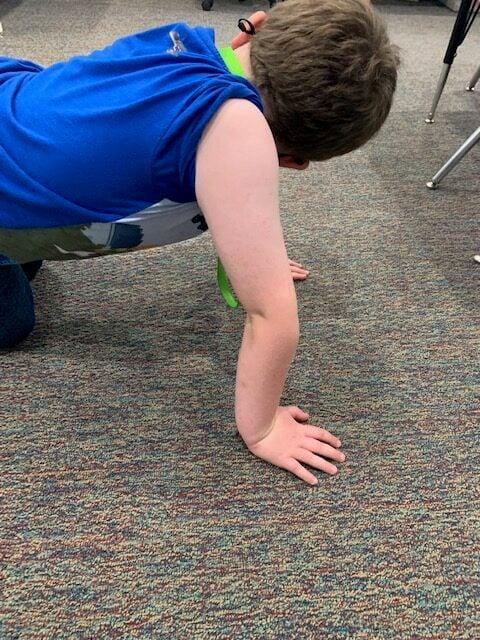
| Knee Hyperextension | Elbow Hyperextension | Hands to the Floor with Straight Knees | Flat Feet |
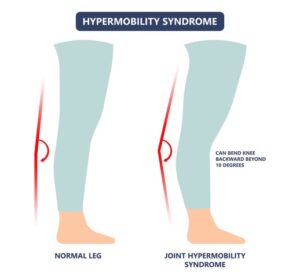 |  |  | 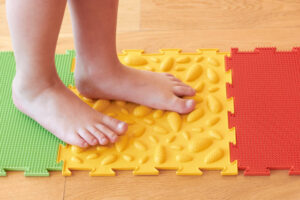 |
NOTE: These are all postures that can occur in typically developing children with no cause for concern. However, when multiple joints are impacted and your child twists their ankles or knees frequently, or reports leg pain this may be a sign to follow-up with your physician.
Who can help my child?
BDI Pediatric Physical Therapists create a strengthening and proprioception program that can improve your child’s participation in recreational activities as well as lower their risk of injuries. Exercises consist of
- strengthening the muscles around the joints
- working on postural control
- sport specific training
Next Steps
Do you think your child is at risk for injury due to hypermobility? Schedule a free screening with one of our pediatric physical therapists. When hypermobility is identified and treated with a proper development regimen, your child will report less pain, improve balance, strength, and functional performance. In addition, your child can prevent future pain.
Written by: Lisa M. Wood, PT, DPT
Taggedhypermobilitymuscle tonePhysical Therapycoordinationbalance
Related posts
When the Weather Changes, So Can Our Mood: Helping You and Your Child Brighten Up
When the Weather Changes, So Can Our Mood: Helping You and Your Child Brighten Up As the seasons change, so can our moods, energy levels, and daily routines. Shorter days, colder temperatures, rainy afternoons, or long stretches of gray skies can sometimes leave children and adults feeling less motivated, more tired, irritable, or simply “off.”
Back-to-School: Helping Children and Families Navigate the Challenges of a New School Year
Back-to-School: Helping Children and Families Navigate the Challenges of a New School Year As summer comes to an end, families begin preparing for another school year filled with new opportunities, routines, friendships, and experiences. While back-to-school season can be exciting, it can also bring feelings of stress, anxiety, uncertainty, and overwhelm for children, teens, and

Therapy for Parents: When “Do It Again!” Comes 100 Times
If you’ve ever told your child to do something… and then told them again… and again… and again… you are definitely not alone. Sometimes parenting can feel like you’re stuck in a loop, like a video that won’t stop replaying: “Brush your teeth!” “Do it now!” “Okay, one more time…” “Wait, did you hear me?”