hitting

My Kid Keeps Hitting

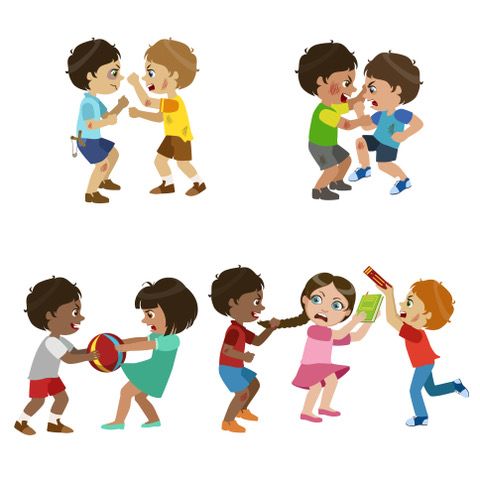
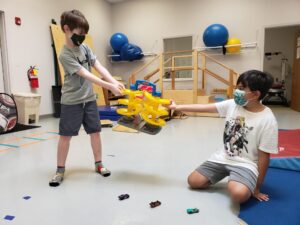
Does your child keep hitting others when he wants what they are playing with? Grab toys away from other children? Kick over other’s toys? These are all considered undesirable behaviors and can be frustrating to watch your child do at home, in their community, or at school.  Here are some strategies to help your child with undesired behaviors. 

Step 1- Hands are not for hitting

Remind your child what their hands are for. Hands are for waving, washing, clapping, counting, drawing, doodling, holding, hugging and eating. Hands are not for hitting. Hitting hurts!

Step 2- Use these words

Teach your child the words to use when wanting something from someone else. Can I please have a turn? Could I see that toy? Let your child know they have to wait for the answer. This may be the hardest part. If a child will not share a toy provide suggestions for another toy to play with.

Kids Fighting

Step 3- Hitting hurts

If a child does hit, have the injured child tell that child,” I don’t like that, that hurts!” 

Step 4- Don’t force apologies

Do not make your child apologize for undesired behaviors. Making a child apologize has no meaning behind it if they are just saying it because you told them too. Some children may use this to their advantage and think, “It’s OK to hit if I apologize afterwards.” Remind your child that it hurts others and our hands are not for hitting. We must use our words to ask for what we want.

If hitting persists or your child is unable to utilize the strategies, call to schedule a free screening with one of our pediatric therapists.  Sometimes, hitting occurs when a child does not have an ample vocabulary or language to make requests or negotiate.  It can also occur when a child excites easily or seeks input.  Our trained therapists will be able to give additional recommendations unique to your child’s needs!

Written by: Jessica Frederick, COTA/L

Engorgement

Breast Engorgement

What is the best way to prevent engorgement while breastfeeding?  Frequent feedings!  Feeding your baby 10-12 times per 24 hours and making sure your breasts are emptied each feed should reduce your risk of experiencing engorgement.  However, if you are experiencing that painful fullness here are a few tips

Strategies to reduce engorgement

Before Breastfeeding

  1. Hand express or pump the breast for 1-3 minutes prior to feeding
  2. If you can get milk to flow use moist warm compresses to increase milk flowing
  3. If you cannot get milk to flow use cold pack on breasts
  4. Warm shower with back to water, taking a “breast bath” in warm water, and/or applying wash cloths that are moist and warm

While Nursing

  1. If the breasts or areola are too swollen for baby to latch pump or and express for 1-3 minutes to soften breast before feeding. 
  2. Apply light to moderate pressure (REVERSE PRESSURE SOFTENING) to move fluid around nipple and to make it more latchable.

Between Feedings

  1. Use cold compresses, over a protective layer of fabric, on your breasts, chest, and under arms to help decrease swelling.
  2. Wear bras that are not too loose and not too tight.

Engorged breasts can make your breastfeeding experience tough.  The best way to treat engorgement is to prevent it!  However, if you are experiencing persistent engorgement and would like additional help, schedule a free screening with one of our lactation counselors.

Written by Jessica Keenan, MA, CCC-SLP/L, CLC

Mom's breastfeeding

Benefits of Breastfeeding

What are the benefits of breastfeeding babies?  Many moms are faced with familial and societal pressure of deciding whether they want to breastfeed or formula feed.   Before making the decision based on others experiences or the latest baby marketing trends, read on to find out how breastfeeding benefits baby, mom and your community!

Benefits of Breastfeeding

Baby

  • Decreases risk of mortality 
  • Reduces risk for asthma, upper respiratory infections, allergies, ear infections
  • Less risk for colic, reflux, gas, diarrhea, constipation, GI pain
  • Decreases risk for obesity, type 1 diabetes, Autism, ADHD
  • Increases intelligence scores
  • Reduces risk for narrow facial development

Mom

  • decreases risk of unwanted shorter pregnancy intervals
  • Satisfies baby’s emotional needs and increases bonding between mother and baby
  • reduces risk of PPD
  • Helps mom to lose ‘baby weight’
  • reduces risk for high blood pressure
  • decreases risk for ovarian and breast cancers
  • increases work attendance due to healthier baby

Community

  • More bonding opportunities for parents/children
  • Higher IQ subgroups
  • Do not have to worry about dangers of manufacturing errors/formula recall
  • Reduced financial strain without costs of formula
  • decreased waste production to make formula
  • reduced health care costs
  • decreased work absenteeism of parents due to infant/toddler illness

When making the decision between breastfeeding and formula feeding, it’s important to consider how it will effect mom, partner, baby, and your community!  Research shows that breastfeeding comes with increased health benefits for both mom and baby, mentally and physically.  Exclusively breastfeeding reduces the workload and financial burden on your partner.  Finally, it reduces the carbon footprint in your community!  Want to learn more?  Join us at our Breastfeeding Basics class!  Already in the thick-of-it and needing some support?  Reach out and schedule a free screen with one of our certified lactation counselors and infant feeding specialists!

Written by: Jessica Keenan, MA, CCC-SLP/L, CLC

play games

Learning to Play Games

Does your child struggle to play simple games, take turns, or is a sore loser? I often work with children who hate losing games or do not have the attention to wait for their turn. This blog will highlight some strategies I use to help children learn to play a board game with the whole family. I’ll break down the steps in how to take turns, select an appropriate game, and dealing with sore losers. 

Taking Turns

The first skill that is important for any type of game is taking turns. While some kids might have the patience to wait their turn, others may think it is life-shattering to watch their sibling move a game piece. Here are some ideas you can use to help your child understand to wait their turn: 

    1. Carpet Squares: have your child sit on something like a piece of carpet, towel, or piece of paper. This is their spot to keep their body for the game. 
    2. Sit at the Table: if your child has trouble sitting still on the floor, then move to the table. Have a firm chair that allows their feet to rest on the floor or footrest.
    3. Take a Break: playing a 5-minute game may be too long for your child to handle at first. Simply take play 1 or 2 rounds of turn-taking then take a break! Then go back to the game where you left off or end the game. If your child successfully takes a couple turns without becoming upset or distracted, then you can always end the game. 
    4. Use your Words: To help a child understand turn-taking, use your voice to label “my turn” and “your turn”. At the beginning of each turn, the child can say whose turn it is. This will help them understand that there are times when they have to wait. 
    5. Change the Rules: Some games involve stealing pieces, losing a turn, or more complex rules. Make the rules easier by eliminating complex rules or make up your own rules to allow for simple turn-taking.  
  • Work in Teams: Use the buddy system to have your child play with an adult or an older sibling who can help them follow the rules.

Selecting a Game

Choose a game appropriate for your child’s physical and cognitive level. If you find that age level games are too difficult, then move to easier games! This is not a one size fits all. First, start with a simple cause and effect game that your child is motivated to play. As you read down the list the games will become harder. 

Cause and Effect Games (Pop Up Pirate)

If you are just starting out teaching your child to play a game, choose simple cause and effect games. Cause and effect games offer quick responses to the child’s action and often do not require a lot of skill. There are simple games that involve quick turn-taking and moving pieces.

Simple Games (Candy Land, Pete the Cat Groovy Button Game, Sneaky Snacky Squirrel)

Now that your child has mastered taking turns, can count 1-10, and knows their colors, you can start with simple board games. 

Medium Difficulty Games (Guess Who, Don’t Break the Ice, Spot It

Here your child is learning to use strategy skills to win a game. The games may involve more rules to follow than before.

Strategy Games (Connect 4, Uno)

Finally, you are ready to play games with complex strategies or require more time to complete. 

Card Games (Phase 10, Go Fish, Games for Standard Deck of Cards)  

There are several varieties of card games available that range in difficulty from easy to complex. Card games are a great way to work on matching, fine motor manipulation skills to move the cards, and executive functioning skills to use strategy to win.

Sore Losers

One major barrier to family game night is that no one wants to play with a sore loser. We’ve all played a game with a child, or even an adult, who is a sore loser- it’s not fun for anyone! Here are some ideas: 

  • Practice What to Say: Before the game even starts, role-play what everyone would say if they lost or won a game. “Good game!” “Better luck next time!” “Maybe next time I will win!” “That’s ok, I tried my best”. You also need to practice letting your child lose! Do not let them win every game. 
  • Be the Role Model: If you win against a sore loser, so those phrases above that you practiced during the game. Do not have the winner have a big party. The winner can be excited but does not need to be over the top to hurt other’s feelings. 
  • Team Games: Play in teams so a child that has trouble playing a game can win every once in a while. 
  • Stop: If your child is becoming out of hand- stop the game and start later when they are calm. 

If you find that your child continues to have difficulty with fine motor skills to operate pieces, understand steps and sequencing to play games, or continue to have tantrums over losing, then we invite you to request a free consultation to discuss how occupational therapy, speech therapy, or physical therapy may help your child want to play games. 

Written by: Megan Wilkison, Occupational Therapist


Wrapping Presents for all Abilities

“Rocking (and unwrapping) around the Christmas Tree” – with Glee

green present

You’ve been plotting, planning, shopping and ordering fabulous holiday gifts for your little one. Now, it’s time to wrap up that pile of goodies! Here are a few tips to make the unwrapping process by your child easier and more fun for everyone!

  1. Use a single piece of tape while wrapping:

    Little fingers have a hard time pinching and pulling long edges of perfectly secured wrapping paper, make the wrapping/unwrapping process easier on both you and your child by securing sides with a single small piece of tape. The easier to unwrap, the less you have to help and the greater independence you foster in your child!

  2. Use festive bags:

    Avoid the hassle and frustration of unwrapping challenges all together by placing your child’s gifts in holiday bags! The ease of reaching in and removing their special gifts makes the moment more magical!

  3. Skip the wrapping, use a blanket, bag or box:

    Instead of wrapping presents, allow for an “unveiling” of gifts done by the child or parent with a “cover and lift” method. Simple placement of a cover leads to easy removal, decreasing the frustration of small eager hands without spoiling the surprise!

  4. Have toys and objects ready for use:

    The morning of a holiday brings chaos. The anticipation of gifts can lead to high tensions in the home. Make the moment more enjoyable for both of you by setting up toys or gifts ahead of time for prompt use. This means ditching the cardboard boxes, cutting through the tough zip ties, and inserting batteries (when required) before wrapping. Your child will delight in being able to promptly play with their new items while you relax and soak up the smiles!

  5. Scraps saved for learning:

    When the gifts have been opened and the bags, wrapping paper and tissue paper have been strewn about the room, collect the remnants in a box for later use. These various textures, colors and papers provide an excellent opportunity to work on skill building such as digging/finding, texture exposure, cutting with scissors, ripping/tearing, sorting, color identification, and other fun play and learning activities!  

Really let yourselves enjoy the holiday season by removing the stress of present unwrapping with these helpful tips! If your child is having difficulty around the holidays with motor skills for unwrapping and/or management of emotions or expectations impacting sleep, behavior or play, BDI therapists are here to help, offering free consultations for families all year round. We are wishing you the happiest of holidays!

Written by: Maggie Lord, MS, OTR/L


Gift Guide

BDI Playhouse is thrilled to share its 2020 gift guide.  This list is compiled by BDI Playhouse’s therapists specifically for children of all abilities.  The toys are shown through an Amazon Idea List but shopping around and shopping second-hand is highly encouraged!  A variation of each one of these toys can be found at BDI Playhouse’s clinics and are used on a daily basis.  The first list contains items that can be bought at the store or sent straight to your house.  The second list contains experience based gifts.  Both are intended to help your child grow in many areas!

Gifts for Growing Minds and Bodies

Amazon Gift Guide

Gifts that Keep on Giving

  1. Season passes: zoo, museum, aquarium
  2. One-time passes: movies, bowling, swimming, theatre performance, Disney on ice, circus, ice skating, roller skating
  3. Subscriptions: KiwiCo, National Geographic Kids Magazine, Little Passports
  4. Class/Season of Lessons: swimming, sports, gymnastics, dance, karate, musical instrument, pottery class, art class, craft class, horseback riding lessons

Thanks for stopping by!  If you have any questions on the best way to use these toys, check out one of BDI Playhouse classes where we demonstrate how to use these materials or schedule a free screening to talk to one of our therapists!


Twas’ The Night Before… Let’s Go to Sleep

Twas’ the night before… anything (Christmas, Halloween, going to DisneyWorld, birthday, or for me, Great America for the first time). I remember how hard it was for me to fall asleep when I got to do something super fun the next day or stay asleep at night. With holiday season here, we may see increased sleep issues in our kiddos. However, many kiddos (and adults) have a difficult time with sleep, not just at the holidays, but every night.   This will detail sleep for both the holidays and every night sleep.

Let’s start with the basics…

What does a sleep deprived child look like?

  • Babies sleeping less than 14-16 hours in a 24 hour period

  • Toddlers sleeping less than 13 hours

  • Preschoolers sleeping less than 12 hours

  • School age kids sleeping less than 10 hours

  • Teenagers sleeping less than 9.25 hours


What do a sleep deprived child’s behaviors say?

  • Difficulties controlling their body and impulses

  • Difficulties getting a long with others

  • Hard time managing emotions

  • Inability to stay focused and perform well

  • “Wired” at bedtime: The need to stay awake is so strong in some children that instead of getting drowsy many get ‘wired’. They appear to have ‘wild’ behavior as long as they have stimulation levels high enough to keep them awake. Once the stimulation decreases they create their own commotion to keep themselves awake.

What do kids need to sleep?

  • In order to sleep a child must feel SAFE. If a child does not feel safe they will have more anxious emotions and a rise in stress hormones which will make falling  asleep even more difficult.

    • What can make a child feel unsafe? – Sleeping in a new environment, changes to their nighlty routine, new or unfamiliar people in the house, unfamiliar lights or sounds.

  • Children need CALM to sleep.  Anything that upsets your child’s sense of well-being will raise their arousal and pull her system in the opposite direction of sleep.

    • What impact’s children’s well being? Parental stress, separation, major life changes, upsetting events, lack of sleep, overstimulation, overscheduled days, anticipation, growth spurts, pressures to perform.

  • Children need to DROP THEIR BODY TEMPERATURE to sleep.

    • Humans need to drop their core body temperature 2-3 degrees in order to initiate sleep. When kids are physically active after 6pm it raises their body temperature, making it harder to initiate sleep.

  • Children need consistent ROUTINE to sleep

    • They need a transition to indicate it’s time to get ready to sleep. This is something that happens every night. (ie: snack, dimming lights, picking up toys)

    • They need a connecting and calming activity. This can be reading together, drawing together, giving your child a massage.

    • They need a cue activity..something that happens every night before bed while the child is in bed. This can be a song, a prayer, turning off the light, or turning on the fan which signals it’s time to sleep.


How do we unintentionally disrupt sleep in our kids?

  • Irregular schedules: If there is more than a 30-60 minute difference between when a child woke up/went to sleep it can throw our kids into jet lag. Even changes in meal time can affect their circadian rhythms.

  • Light: Strong morning light is very important to a child’s body clock keeping a consistent rhythm. If a child is exposed to too much light at the wrong time of the day it sends the wrong signals to the brain about when to sleep. Too many lights on in the house and too much LED screen time before bed is incredibly stimulating to child’s brain and reduces signals for the body to prepare for sleep.

  • Exercise: Not enough or exercise at the wrong time of the day. Children need at least 60 minutes of physical activity during the day. Too much exercise too late at night overheats the body when body temperature should be dropping.

  • Stimulants: One can of soda is the equivalent of an adult drinking 4 cups of coffee. It takes a long time for caffeine to leave a child’s body.


Are there certain times we should expect more difficulties sleeping?:

  • 2 to 3 days before and after holidays

  • Time surrounding growth spurts

    • Growth spurts happen every 6 months in 2+ year olds, much more frequently from birth to 2

  • Troubling events

    • Sometimes it can take up to 6 months for a child whom you otherwise thought was able to cope with a difficult situation to show their stress. Big life changes due to COVID are a perfect example!

  • Vacations

    • The anticipation of, disruption of routine, new environment can all cause difficulties sleeping.

When you know what to expect you can better respond to and care for your child when they are having difficulties sleeping.

How can you help your child sleep?

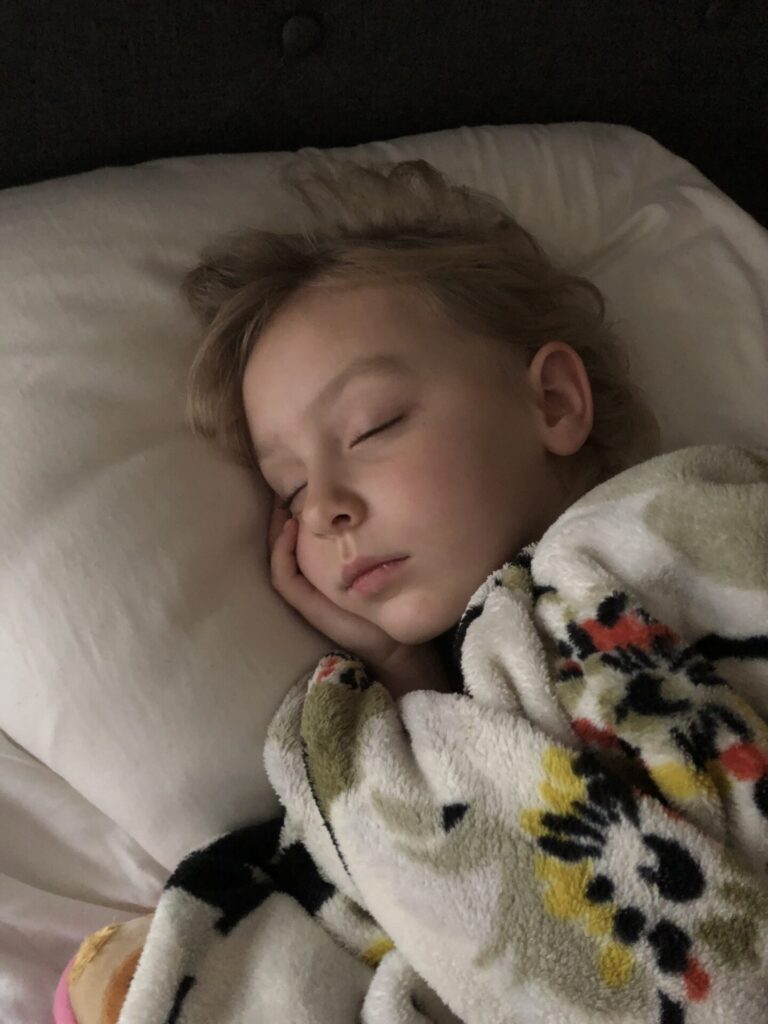
Sleeping girl

It starts during the day!


  • A rushed or stressful wake up in the morning (well all know how short tempered we can be when running late!)can leave your child feeling stressed and disorganized throughout the day.

  • Keep a consistent wake up time in the morning, and predictable timing for naps

  • Schedule meals an hour or two before bedtime and keep consistent meal times during the day. Research shows it’s best to not have a heavy meal right before bed.

    • In your child’s diet include complex carbs; this includes fruit, vegetables, whole grains

    • Reduce simple carbs like candy, cakes, cookies, soda and fruit juices.

  • Provide exposure to morning and daytime light.

  • Make sure your child gets exercise during the day! During the cold long winter months there are many indoors activities you can do with your child to meet their need for movement. Our Occupational Therapists have some great ideas including;

    • Heavy work; this includes pushing, pulling, lifting, carrying, anything that puts those muscles to use.

    • Playing hide and seek.

    • Creating an indoor obstacle course.

    • Pretending the floor is ‘lava’ and your child has to jump on pillows/couch cushions to get from one side to another.

    • Jumping on a small trampoline.

Night time tips to promote sweet slumber:

  • Eliminate screen time at least after dinner- blue light shuts down sleep and suppresses natural melatonin production. If a night light is needed make sure the light is indirect and use a pink light, or warm yellow colors. Turn off the light when the child is asleep.

  • Dim lights around your home after 6pm to signal to your child’s brain that the time to sleep is approaching.

  • Keep a consistent bedtime. Cortisol (stress hormone) increases when a child goes to bed past the appropriate time. This impacts sleep due to increased stress of fight or flight phenomenon.

    • Give your kiddo a hot bath before bed then have child in bed no more than 30 minutes after bath, right after bath is most beneficial. The warm water from the bath helps to draw heat away from your child’s core, lowering their body temperature and signaling to their brain’s it’s time to sleep.

  • Towel dry with firm pressure to give your child sensory input.

  • Provide comfy pj’s and the coldest room possible. Listen to your child, if they tell you a tag is bothering them or their PJ’s feel scratchy find something that will make them feel comfortable. We all know how annoying a scratchy tag can be!

  • Ideal placement of bed is in a corner or against wall looking towards the door. Think about how your child’s bed can become a safe ‘nest’. A bed that sits on the floor with no distinction between the floor can feel to open and vulnerable to a child.

  • Try lavender or vanilla essential oils (therapeutic grade) to assist with sleep.

  • Use a white noise machine to block out distracting noises.

  • Keep the bed away from window so your child isn’t exposed to lights or noises from outside.

  • Use blanket rolls to make  canoe or nest for increased input in the bed. Most of the time when a child crawls into bed with mom or dad they are seeking the pressure they feel from mom and dad’s body against theirs.

  • Consider a weighted blanket or bean bag on child to increase the pressure and sensory input on your child during the night.

  • A massage before bed can help your child feel connection to you their parent and helps their body to calm and meet needs for touch and sensory input.

  • Use a visual schedule. This helps to set expectations for your child and reduces the stress than can occur when your child does not know what will happen next.

We have learned a lot through education, clinical experience, and through reading! A great book full of resources for childhood sleeping strategies that we found invaluable in learning about sleep for this blog is “Sleepless in America” by Mary Sheedy Kurcinka ; “Sleepless in America” by Mary Sheedy Kurcinka.  If you would like more information or need help with implementing these strategies, please schedule a free screening with one of our skilled pediatric Occupational Therapists.

Written by Jessica Frederick COTA/L and Amy Stumpf, M.S., CCC-SLP/L, CLEC

BDI Staff’s Holiday Traditions


It’s the most wonderful time of the year!  There is always a little bit of extra joy and excitement as we fill our clinics and lesson plans with holiday themes.  We love hearing about our staff and kiddos’s family traditions and how they plan to celebrate the holidays with their families.  Each tradition is so special and unique that it warms our hearts!  Here are some of the special traditions our BDI PLAYHOUSE staff have shared.

Staff


“As a child, I loved getting out all our decorations, but especially our holiday books. My parents would pack them away each year, so getting them out for the holiday season made them new and exciting again! We’ve continued this tradition with our kids, adding a new book to the collection each year on the day after Thanksgiving.” – Alison K

“The excitement of getting to open one present on Christmas Eve!” – Amy S. 

“I remember having a sleepover with my sister under the Christmas tree on Christmas Eve. We always tried to “catch” Santa, but fell asleep too easily.” -Andrea T. 

“My family tradition is a German tradition that we would hide a pickle ornament on our tree at some time on Christmas Eve. The tradition is, that the 1st child to find the pickle got to open 1 gift on Christmas Eve. Well, I have 3 kids, so I ended up having to buy 3 pickles and wrote their names on their pickle so no one got upset that someone got a gift and the other didn’t.  My kids are almost all grown now (at 21, 19 & 14), and on Thanksgiving, they still asked if we were “going to do the pickle” this year. Makes my heart smile that they still find this a fun thing to look forward to.” – Ann Marie

“My favorite holiday memory as a kid is waiting on the stairs (impatiently) Christmas morning while my mom went down and made her coffee while checking to see if Santa came. It felt like an eternity!! I now do the same to my boys and they talk about it all the time as well!” Ann T.

“My family is BIG on holiday traditions! Every year, we go downtown to watch “A Christmas Carol” at the Goodman Theatre. It’s a story that never loses it’s magic!” – Jade Pellerito 

“My family participates in the Polish tradition of breaking “Oplatki” before Christmas Eve dinner.  Each family member breaks off a piece of one another’s wafer and wishes a blessing for the upcoming year.” -Jamie B. 

“One of my favorite Holiday Memories, was taking the train with my parents to downtown Chicago and see the Christmas Windows at the stores, and eating lunch at the Walnut Room.

“My other memory was of decorating 2 christmas trees (one upstairs – that had all of the one of a kind, usually breakable ornaments, and Eggshell ornaments that my mom made when pregnant with my brothers).  She would blow out the egg and then decorate the shell with scenes inside.  We would unwrap the ornaments from their protective coverings, while my dad fought in the corner trying to figure out why the strands of lights weren’t working.  The basement tree was usually a real one, and this is the tree that had all of the school and kid made ornaments throughout the years.  (4 kids) lots of these ornaments. Now as a parent, My mother still gives each of us (adult couples got glass one of a kind ornaments) and each of the grandkids had an ornament collection started when each grandchild was born.  Now as my nieces and nephew move out of their parents houses, they are taking their ornament collections with them and adding them to their own trees.  My kids put up my tree every year on the Day after thanksgiving.  This with them being in Highschool and College, they did it during the night while I slept.  So I had a beautiful tree up when I got up, and then had to clean up all of the ornament boxes and bubble wrap…as they did not put them back in the storage containers.” – Jenn Sparano

“My favorite Christmas holiday tradition is celebrating Wigilia, which is the Polish tradition of celebrating Christmas Eve with a dinner, exchanging presents, and attending Midnight Mass with my family.” – Jess D

“My favorite holiday tradition when I was little was for us to go look at lights and then get an icecream after.  I still do it every December!” – Jess K

My favorite holiday tradition is the “Santoro Snack- a- long- Sing- a- long,” when my family packs the house with friends, neighbors, snacks, music, and holiday cheer! My mom hands out sing- along song sheets and instruments borrowed from her kindergarten classroom, and leads the group in song while wearing a microphone head-set! My dad accompanies the shenanigans on the piano. My stomach is guaranteed to hurt from laughing and my face from smiling year after year!” – Kristen S.

“I have loads but one that really stands out for me was helping decorate my Nana’s Snow Village set. She had it all around her house. And we enjoyed looking at the houses and people all lit up. My Nana would also bring my cousins and I out for a holiday tea lunch in Long Grove. We would put on dresses, wear hats, and enjoy tea and little sandwiches. It was so special. She has gifted me some of her Snow Village houses now. I love setting them up (in careful places ofcourse) and watching my kiddos stare and smile at them.” – Maddy C. 

“My favorite Holiday tradition is getting together for our annual cookie baking weekend where we bake 10 different types of Holiday cookies, assembling them on a giant plate to eat at the Christmas Eve party.” – Rebecca M.

My favorite holiday tradition is going to church at midnight on Dec 12th with my mom (always hopeful the rest of the family would join us) to celebrate Dia de la Virgen de Guadapule (The day of the Virgin of Guadalupe) who is Mexico’s patron saint. Even on the years I was not able to join my mom, I was involved in a reenactment play of the event and voiced the Virgin’s voice in Spanish and English for the community. – Ruby L.

“My favorite holiday tradition from my childhood was putting up christmas lights outside with my dad on the Sunday after Thanksgiving!”    – Shahana

“Every Christmas we participated in a Secret Santa where we secretly chose a name and then left little Christmas gifts at their door. Nobody knew who their secret Santa was until like a week before Christmas. They were some great memories dropping off gifts and trying not to be caught.” – Sheila T.

“My favorite holiday tradition as a kid was always coming home from my grandmas on Christmas Eve to leave out cookies we made for Santa. My favorite tradition as an adult is an ornament exchange between my husband and I we do every year that reminds us of something that happened or we enjoyed throughout the year to look back and reflect on!” -Stephanie C

“My most vivid childhood Christmas memory was when my dad decided to burn the Christmas tree in the family room fireplace! Yep, he thought he’d just slowly keep shoving it further into the fire while it slowly burned but POOF, up it went and we almost needed a NEW house! We teased him EVERY year about this!” – Sue
We hope that all our families, staff and communities have a very safe and magical holiday season!  

With love and holiday cheer, BDI Playhouse 

Santa

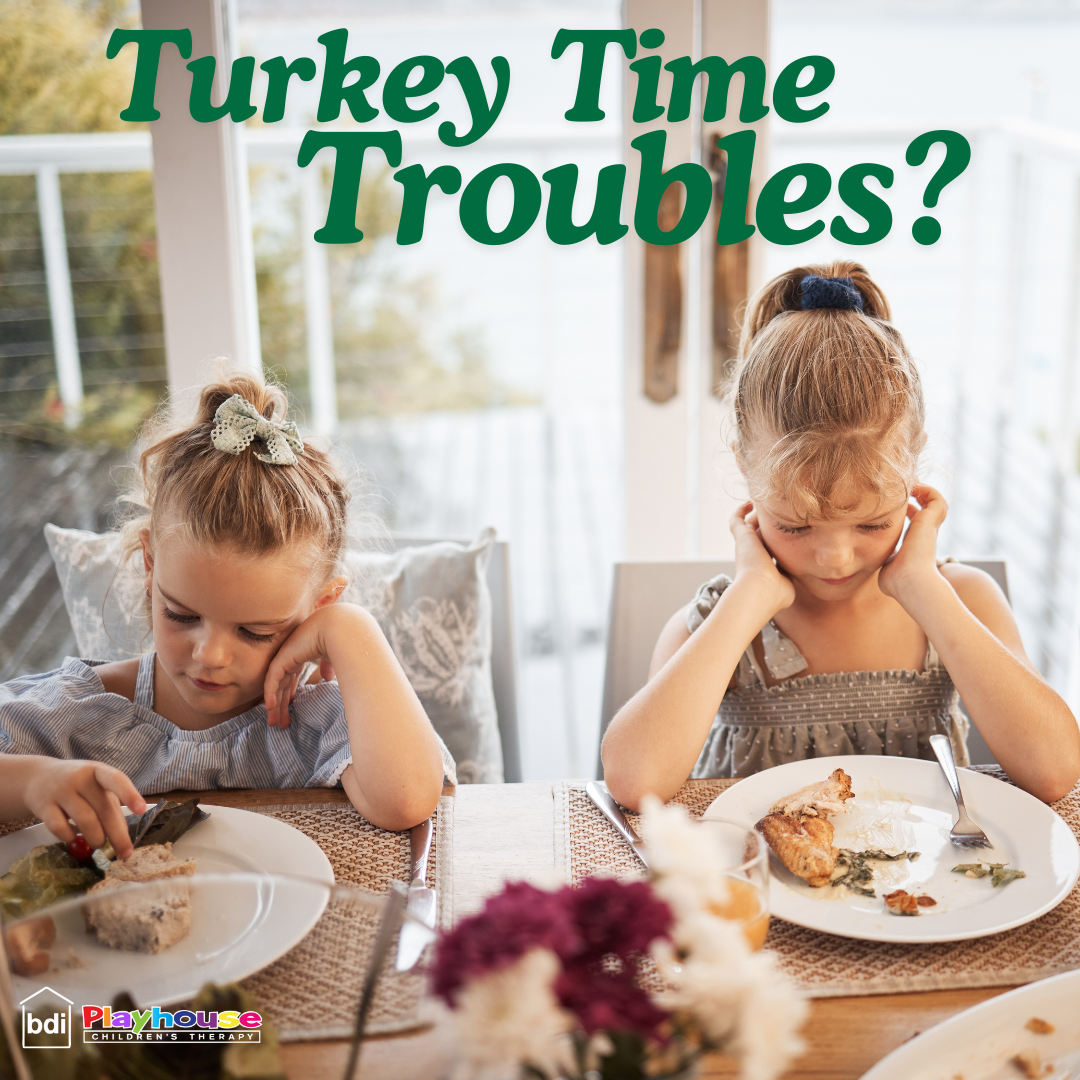
TURKEY TIME TROUBLES?

Turkey Time (as referred to by many of our kiddos) is just around the corner and it is either met with happy or anxious anticipation by children and adults!  A family member announces every Thanksgiving that this is her least favorite holiday because of how overwhelmed she feels with all the food options.  She says the anxiety starts weeks before the big day.  She has the ability to identify, process and express her anxiety related around a holiday.  Imagine, now, a child with the same feelings.  What might his or her anxiety look like?

Anxiety signs in kids:

  • Crying
  • Fleeing the table
  • Poor Sleep
  • Upset/outbursts more frequently or higher intensity than is typical
  • Irritability
  • Grimacing
  • Sweating
  • Yelling
  • Wide eyes
  • Gagging or vomiting
  • Decreased appetite
  • Tense or jittery body
  • Frequent urination

So, what can you do to help make this time less anxious for your child?

How you can help:

  • Take the pressure off! No need to focus on or force the idea of sitting down for a large meal with relatives!  Keep it casual for your kid
  • Validate feelings of discomfort around the holiday
  • Brainstorm food avoidance strategies for use at the Thanksgiving table with your child
  • Interact with Thanksgiving foods without eating them
  • Talk about it- set expectations and boundaries for the holiday festivities
  • Take breaks from the commotion 
  • Turn the focus- make the focus of the holiday less about the food and more about family, crafting/decorations, gratitude, whatever is important to your family!
  • Engage in calming strategies throughout the month.  Examples of calming strategies include heavy work, deep pressure, auditory supports, movement strategies, deep breathing/relaxation strategies, tactile bins, lighting adjustments, and visual toys.  These strategies can be used around meal time and outside of meal time.

Turkey time can be a successful holiday for your entire family, especially if you identify and prepare for the day ahead of time!  If you’d like additional resources, please set up a free screening with one of our occupational therapists at BDI playhouse!

Written by Maggie Lord MS, OTR/L, and Jessica Keenan, MA, CCC-SLP/L, CLC

Spooky Speech

Speech Language Pathologists love a good theme!  Themes can unite all of our kiddos but allow scaffolding for every child’s needs.  They also allow for perfect home carryover for all our families!  Here are a few spooky speech activities that you can do with your children at home or in your community to promote speech and language development.


Books:

Books are fabulous!  You can target specific vocabulary, different grammar (i.e. prepositions), comprehension, sequencing, feelings, and speech sounds!  An example of a spooky themed book is Pete the Cat: Trick or Pete, an interactive book with flaps.  We love to practice our speech sounds with this particular book!  For example, the t sound is on every page with CAT and PETE!  


Sensory Bins:  

You cannot go wrong with a sensory bin!  They hold children’s attention and their bodies in one space.  Sensory bins can also encourage some spooky speech with what we call “focused stimulation”, when you pick a few words to target over and over again during play!  Spooky speech sensory bins can easily be made from items around your house or a few clicks from amazon! If you are in need of some inspiration Busy Toddler has fantastic options. 


Youtube: 

Technology does not have to be a curse if used correctly!  There are so many books and programs that provide ample spooky speech opportunities! You can play Peppa Pig Pumpkin Party and pause the video, ask simple wh questions, name vocabulary items, make predictions, and try to recall details of the program!


Bingo Card:

A fan favorite at the clinic is using a free printable Halloween Bingo Card.  We use these for matching, naming, identifying, and speech sounds!  You can take the Bingo Card into your community (i.e. grocery store, on a walk, flashlight to find items around the house) for a scavenger hunt.  Target and Michaels have Halloween dollar-sticker-books that we use to say the spooky words as we match them to the bingo card. 


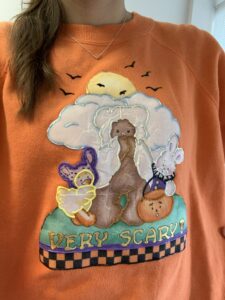
Halloween SweaterFestive Wear and Decor:

As cheesy as it may seem, children LOVE pointing out spooky vocabulary on clothing items and decorations.  If you are trying to be eco and/or budget friendly, we highly recommend looking at your local thrift store, facebook marketplace, or your parent’s house for the clothing and decorations!  Some of the best items come second hand!  Another more eco friendly, minimalist approach would be to get items that will be re-purposed or consumed!  I.E. a pie pumpkin, a wreath that can be decorated for all season with items found in nature! 

If you feel like your child’s speech and language development isn’t spook-tacular and you’d like to speak with someone about your pumpkin’s speech and language development, please call 708-478-1820 or visit our website to schedule a free screening


Written by Jessica Keenan, MA, CCC-SLP/L, inspired by Kristen Santoro, MA, CCC-SLP/L