Preschool: Top 5 Reasons Why Preschool is Important

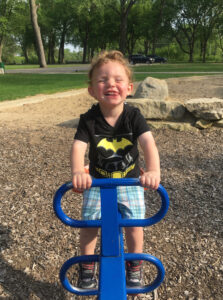
Questioning whether or not to send your child to preschool? From a therapist perspective, preschool is such an important piece to practicing skills required later down the road. It facilitates structure, independence, social-emotional learning, and the foundation for higher level skills. 

1.  PLAY AT PRESCHOOL

Play is how kids learn! They learn to use their imagination, be creative, socialize with others their age, share, and problem solve when an obstacle arises. It also provides various play experiences through structured and unstructured activities, all of which allow children to build confidence, a sense of self, and critical thinking skills.

2. STRUCTURE

Preschool is where children start to participate in more structured routines like stations, lining up, singing a morning song, or learning the days of the week. Consistent routines are important for understanding expectations, predictability, and at the same time adapt to any changes that may arise. 

3. FOUNDATIONAL SKILLS

Preschool helps you develop: 

      • Fine motor skills (pre-writing strokes, grasp, stringing beads, scissor skills)
      • Visual motor skills (building block structures, coloring)
      • Gross motor skills (catching, jumping, playing on the playground)
      • Communication skills (having conversations with others, identifying colors, asking questions)

4. INDEPENDENCE 

Preschool instills independence and provides an opportunity for children to develop self advocacy skills and personal interests. Within preschool, children start learning how to take responsibility for their actions and provide numerous occasions to complete simple tasks on their own. 

5. SOCIAL-EMOTIONAL LEARNING

The preschool environment gives children the chance to engage with others, navigate conflict, understand their own emotions, and learn about empathy. Building on these skills at a young age provides children opportunities to grow and reach their full potential and beyond. 

If you find that your child may have trouble in one or more of these areas, reach out to the BDI Playhouse office to schedule a free OT, ST, or PT screen. 


Written By: Kiersten Robertson, MOT, OTR/L
 

Reflex

Primitive Reflexes

Primative Reflexes- The Good, The Bad, The Better!

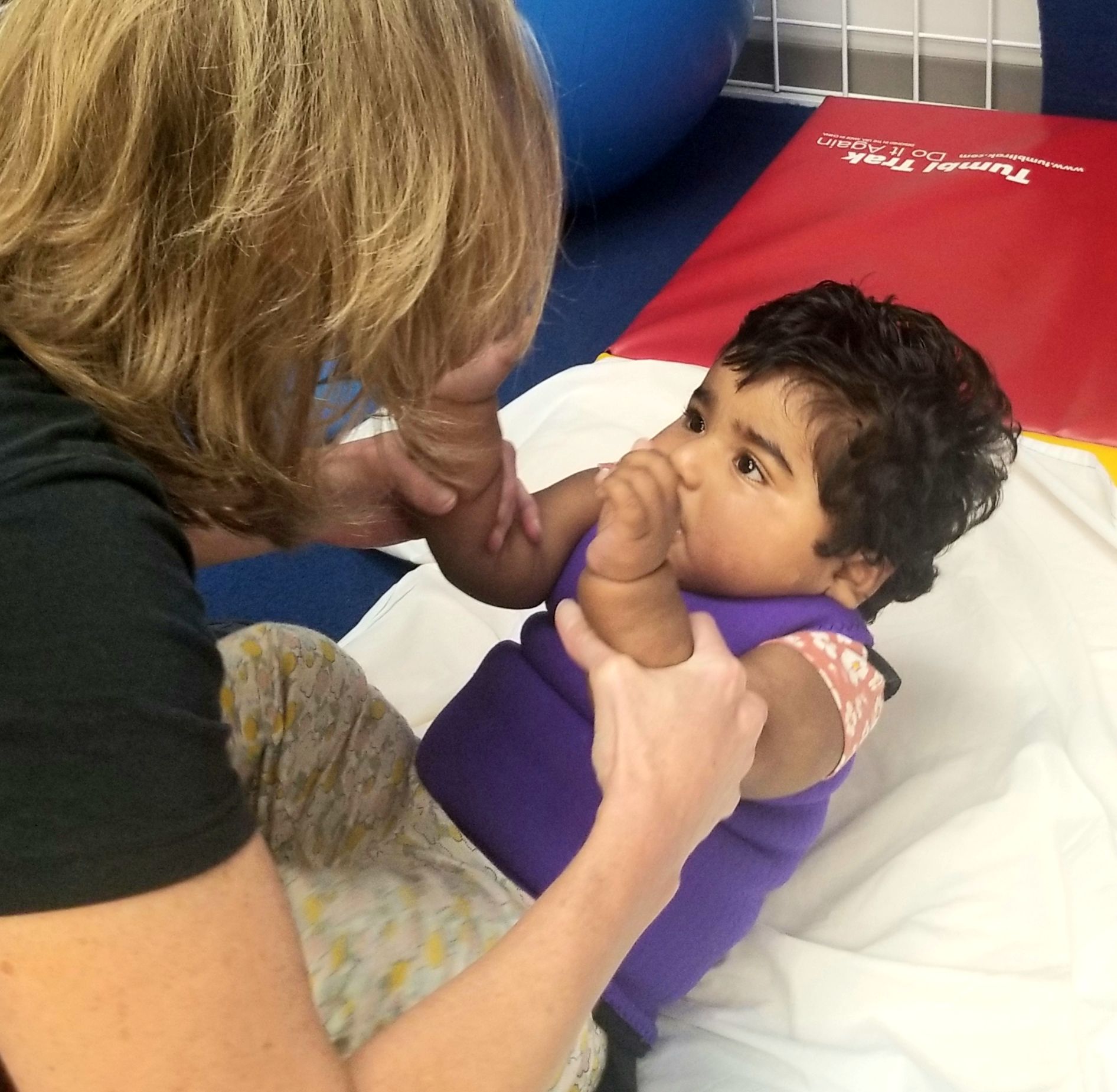
Have you ever tripped and simultaneously reached out your hands to stop the fall? That is your primitive reflexes at work! They are essential as the first line of defense to protect ourselves but they can also be detrimental to our development.

What are primitive reflexes? 

Primitive reflexes are involuntary motor responses present at infancy that facilitate survival. Pediatricians check these reflexes at wellness visits to ensure the nervous system is working properly. It is important that these reflexes are present but it is just as important that these reflexes mature or integrate in early childhood. 

The Good: 

REFLEX

GOOD

Moro Reflex

The startle reflex

A fear response to sudden movements or noise
Hands PullingHead control reflex and the ability to contract our muscles to sit up
Hands SupportingOur falling reflex. Ability to reach out and catch yourself.
Tonic Labyrinthine (TLR)Develops balance and spatial awareness
STNRHead, limbs and balance system connection
Asymmetrical Tonic Neck Reflex (ATNR):  Differentiates our left and right side.
Spinal GalantConnects the trunk and lower body
AmphibianActivates nerves between both hemispheres of the brain
Babinski:Supports mature walking and balance
BabkinTongue and mouth coordination for eating and speaking
PlantarProtective response to provide stability
PalmarAdvances fine motor movements of fingers.
Landau Promotes ability to control head in tummy time

Why do reflexes need to integrate?

We unconsciously use these reflexes everyday, but what happens when we are unable to consciously control them? That’s what happens when reflexes don’t integrate. It’s like being in a self driving car and not being able to take control of the wheel, which can be very scary. Sometimes our reflexes do not mature because of abnormal movement patterns in utero or infancy, neurological deficits, or just unknown reasons. These primitive neuro connections are powerful and can inhibit our ability to voluntarily control our body and mind if they are retained.

How do reflexes affect development?

A retained reflex can present in strange ways causing possible behavioral, emotional, sensory and physical deficts. Not all reflexes present the same way in every person but they do have common patterns. The infant’s movements work together in sequence during development. If one reflex does not integrate it can cause others to also be retained. It is not uncommon to see two, three, or almost all the reflexes present during a primitive reflex evaluation. The following are common traits you might see if reflexes are retained.   

The Bad- Unintegrated Primative Reflexes

REFLEX

GOOD

BAD

Moro Reflex

The startle reflex

A fear response to sudden movements or noise
  • Anxiety
  • Difficulty sleeping
  • Insecure
  • Sensitive to light
  • Sound and/or touch
  • Emotional
  • Common in toe walkers 
Hands PullingHead control reflex and the ability to contract our muscles to sit up
  • Poor muscle tone
  • Poor hand, eye, and mouth coordination
  • Delayed gross and fine motor movements 
Hands SupportingOur falling reflex. Ability to reach out and catch yourself.
  • Clumsy
  • Poor personal boundaries
  • Aggressive
  • Avoids interactions
  • Difficulty processing information
Tonic Labyrinthine (TLR)Develops balance and spatial awareness
  • Motion sickness
  • Poor sense of time and organizational skills
  • Coordination difficulty
  • Spatial and balance problem
STNRHead, limbs and balance system connection
  • Crawling difficulty
  • Low muscle tone
  • Slumps while seated
  • Difficulty copying tasks
  • Poor attention
  • W sits 
Asymmetrical Tonic Neck Reflex (ATNR):  Differentiates our left and right side.
  • Challenged with crossing midline
  • Difficulty catching
  • Focus and memory difficulty
  • Auditory challenges
  • Dyslexia
Spinal GalantConnects the trunk and lower body
  • Postural deficits
  • Hip rotation effecting gait
  • Hyperactive
  • Fatigues with cognitive functions
  • Bed wetting
AmphibianActivates nerves between both hemispheres of the brain
  • Rigid movements
  • Limited stride length
  • Poor coordination
  • No rotational movement
  • No hand dominance
Babinski:Supports mature walking and balance
  • Tripping
  • Stabilizes with tongue
  • Oral motor and articulation deficits
  • Flat feet
  • Walks on toes or sides of feet 
BabkinTongue and mouth coordination for eating and speaking
  • Open mouth posture
  • Poor mouth coordination
  • Lacks facial expression
  • Speech delay
  • Sensory chewer 
PlantarProtective response to provide stability
  • Grasping hands
  • Poor running/jumping
  • One sided crawl
  • Standing delay
  • Fight/flight response to loss of balance.
PalmarAdvances fine motor movements of fingers. 
Landau Promotes ability to control head in tummy time
  • Poor posture
  • Clumsy
  • High tone in legs
  • Visual challenges
  • Depression and fears
  • Poor focus and balance


The Better: 

It is extremely common to have one or more reflexes present and you might even identify some of these traits in yourself. That does not mean it needs to be treated unless the reflex is so dominant that it interferes with the ability to learn, be safe and thrive. Reflex therapy helps to identify and create an individualized reflex exercise program to promote integration. The brain responds by taking the wheel and improves control over it’s own mind and body. Now that’s better!


If you think your child may have primitive reflexes present we can help! Free primitive reflex screenings are available via Zoom or in person at our Orland Park or Naperville/Aurora locations. 

Back to School

Back to School Transition Strategies

Back to School Emotions

August means back to school is right around the corner!  Back to school means transitioning to new schools, new teachers, new peers, new expectations and new routines! Many kids are excited about the anticipation of a new school year, but for many kiddos “new” can be scary and worrisome. 

Children can communicate their emotions through a variety of behaviors. It’s important as parents and caregivers to be aware of these behaviors to help our kiddos manage their emotions and provide opportunity for a successful transition back to school!

The best way to help our kiddos with new tasks is by creating predictability and maintaining consistency in their routines.  This will help ease their worry and fear while building their confidence for success.

 Simple Strategies to Help Back to School Transition: 

Waking and Bedtime Schedule

We all fall into the summer slump of less structure and organization in the routine of our days. Beginning at least a month prior to the first day of school, begin  implementing a waking and bedtime schedule that will mirror your child’s school time routine.

Visual calendar count down

Time is a vague concept for young kids, so counting the “number of sleeps” until school starts is a meaningful way to incorporate how many days until the first day of school.

Social Stories

Read social stories and talk about expectations for the new school year.  Don’t forget to highlight important details that you know they are looking forward to (including a favorite teacher, familiar classmates, exciting activities they are looking forward to that year), but also recognize and discuss novel tasks that may cause stress (such as attending at a new building, bus rides, lunchtime, whatever it may be).

New Peer Playdates

Reach out to local parent/community groups to set-up park meet-ups/ playdates to become familiar with new peers.

Trial Run

Do a trial run before school starts. Drive by your child’s school to create familiarity.  Is there a park accessible to play at? Go play to create positive experiences associated with the school. This will help to see where you might have some bumps getting on the road and need to tweek parts of your morning routine.

Label feelings

Validate their feelings. Use visuals when you can. Provide your child with a ‘toolbox” of calming strategies to attain/maintain a feeling of calmness throughout their day.

Model Confidence

Model your confidence to make them feel confident (even if you have to fake it); kids feed off of our emotions. This includes talk enthusiastically about what a positive experience this will be, avoid lingering at drop-offs and encourage participation in new activities.

Back to School Mantra

Create a mantra to repeat out loud.  “I am safe” is one of my favorites!

List of Resources

Below are a list of resourceful links to provide more information about typical/atypical behaviors, countdown calendars, addressing feelings and visuals for calming strategies:

  1. Managing Behavior Strategies
  2. Social Story
  3. Journals
  4. Emotions for Kids
  5. Back to School Countdown

Don’t forget, what may seem like a minor problem to us as adults, feels like a BIG problem to our kiddos, especially when they are learning to recognize and handle their big emotions.  Make the experience easier for them by  remaining calm if things do not go as planned, or their reactions don’t meet our expectations. Don’t forget to model flexibility to bumps in routines.  Also,  remember that changes don’t happen overnight and give your child time to settle into their new routines! If things don’t get easier and you would like some additional strategies, please schedule a screening with one of our therapists to help find individualized strategies for you and your child.

Written by Jamie Blough

Middle School Picky Eater

Middle School Picky Eater

Are you a middle school parent on the fence about whether or not to try feeding therapy for your picky eater?  At BDI Playhouse, we work with middle schoolers both in the clinic or from the comfort of your own home.  We help kiddos with a variety of feeding needs such as increasing their caloric or nutritive intake without the need to supplement all the way to eating chicken at your neighborhood BBQ or pizza with their friends after a sports activity and anything in between.    

The best part about doing feeding therapy with older kiddos, in our opinion, is that they can tell us what they are feeling and thinking when it comes to food and they can be active participants in setting (and achieving) their own goals.  

Here are a few thoughts from a middle schooler in feeding therapy:

What’s the best part of doing feeding therapy?

I get to try foods that I haven’t tried before and that I am interested in trying.  I like doing it at food therapy because more than one person gets to see my reaction and I get to talk and chat!  

What’s the best part of doing food therapy online?

You can do food therapy and not worry about the virus.  Whenever I am at home, I don’t have to wait until my parents drive me home, I get to do whatever I want as soon as the session is done.

What would you tell a kiddo your age if they were on the fence about trying feeding therapy?  

The more therapy that you do the more excited you will get to try new foods.  

What’s your favorite thing you’ve done in feeding therapy?

I got to try a food from a show (dalgona cookies from Squid Games).  We also get to do “challenges” where we pick a food and try different flavors of it!  We had a candy night and tried all different candies.  We’ve done a poptart night and tried 8 different flavors of pop tarts.  We make food together.

Still on the fence of whether it would be a good fit for your kiddo?  Schedule a free screening with one of our feeding therapists to learn more about how we can help your middle school kiddo learn to love trying new foods!

Mealtime Wiggles

So frequently do I hear “my kid takes a bite to eat then leaves the table” or “my kid can’t sit still throughout his entire meal” creating a lengthy meal time and impacting positive mealtime dynamics. Here’s come tips and tricks for getting your child to sit for longer durations:

  • LOTS of heavy work right before meal time!
    • Helps get extra energy out right before having to sit down
    • Bear walks, wheelbarrow walks, rolling child up in a blanket like a burrito and then unrolling MANY times, frog hops, running and crashing into pillows/ blankets over and over, crawling over pillows/ blankets/ couch cushions thrown unevenly onto floor, inchworms, belly on ball arm walkouts, lifting or pushing heavy baskets
  • Wiggle cushion
    • Round or inclined textured cushions can help provide movement even while seated (can be purchased  on Amazon)
    • Can also place cushion on floor for child to stand and move on while remaining at table.
  • Weighted blanket or lap pad while seated; weighted shoulder wrap (also available on Amazon )
  • Boundary to maintain near table, even if not sitting.
    • Try a chair with arms on it
    • Provide painters tape boundary on floor for child to remain in during meal. Start off bigger and make boundary smaller as the child displays readiness. Be strict on maintaining in boundary area throughout meal.
    • Can provide sensory movement items in this area.
  • Thera-band wrapped around chair leg
    • Child can push legs/feet to fidget on band while sitting
  • Allow child to stand and eat if that’s what is needed to remain near table
  • Wobble stool (available on Amazon)
    • Only use if child has enough core stability and safety awareness
    • Ensure table height matches with chair height
    • Better for older children
  • Stabilize those little feet!
    • Stabilizing the feet will help to stabilize the core. When our core is not stable, our attention is overall decreased and chewing can become a chore.
  • Textures or fidgets
    • Attach velcro textures under table or chairs
    • Special “meal only” fidgets to play with and only while sitting or standing right at table
  • List of discussion topics for family to engage in
    • Talk about feelings  throughout day, favorite/ worst moments
    • Distraction is a great way to enhance attention
  • Have child walk around with weighted backpack for up to x20 minutes prior to meal
    • Can wear while helping set table
  • Timer
    • See how long the child can tolerate sitting, then lengthen the timer just a bit longer. When sitting for timer duration is easily attainable for child, adjust timer for a slightly longer time frame.

*Strategies may take multiple attempts to see change. Keep trying and be consistent!

*Some strategies may work, and some may not. That is okay! Find what is right for your child.

If your child is having trouble sitting still during mealtimes, during free time playing at home, in the school setting, and overall seeking extra movement from same aged peers or siblings don’t hesitate to give us a call. BDI Playhouse Children’s Therapy offers free screenings and consultations through Telehealth or at one of our child-friendly therapy gyms in Orland Park and Aurora, IL.

Written by: Rebecca MacKenzie, M.S., OTR/L

Undistracted eating- Meals without the iPad

It has become a common occurrence to see a child on an iPad while out to eat, and often enough we hear families telling stories about iPads at meals. We get it. It is hard! Kids don’t want to sit still; kids don’t want to eat right now; my kid is super picky; there’s more than one kid to take care of so the iPad acts as a babysitter. The reasons go on and the iPad makes these small parts of the day run a little bit smoother. But here are some important reasons why undistracted eating is best and tips how to try and ditch that iPad altogether while at the table. 

  • Promotes obesity OR child may not be eating enough
    • When deeply focusing on the iPad it is common to robotically continue to place food into our mouths without realizing just how much food we’ve eaten. Adults do it too!
    • Children may become SO distracted they minimally eat anything at all! Later you find them irritable and “always hungry”, as some parents report.
    • This impacts a child’s ability to listen to cues from their body (interoception) on when they feel full,  if they are still hungry, or if they need a drink of water. This is SO important! Lack of attending to our body cues can begin to impact our emotional awareness and control.
  • Promotes poor posture
    • Increases risk of future musculoskeletal problems such as back and neck pain due to leaning position
    • Carry over poor seated posture to school and play
    • Increases choking risk due to decreased attending to oral feedback telling us we’ve chewing enough times prior to swallowing and poor posture impacting alignment of swallowing mechanisms impacting ease of food movement down to tummy
  • Decreases social interactions
    • Discourages learning about others, asking questions about the world, discussing our emotions, working on back and forth conversations, discussing foods presented on plate
  • Minimizes exploration with foods 
    • “Well my kid is picky anyways…”, but that is okay!! (and may actually be a result from all the table iPad use)
    • Kid gets busy touching iPad and not exploring or playing with the food options
    • When a child gets “bored” sitting at the table they will be encouraged to fidget with anything…including food. Encourage this, even if it doesn’t get eaten.
  • But what can I do besides an iPad?
    • Fun plates (Amazon “kids maze plates)
    • Silly utensils (sometimes comes with the plates and can be found on Amazon)
    • Specified “table toys” if they absolutely need something to do while eating (especially out at restaurants)
    • List of questions to discuss with parents or siblings (best/worst part of day, what else do I want to do today…)
    • Exploring then reporting the senses of each food – smell, lick/taste, color, visual presentation (bumpy, smooth, fluffy…) and
    • comparing one strawberry to another one, feel (wet/dry, tough/soft…)
    • If you haven’t started providing an iPad at meals, don’t start it!! Even if the older sibling is stuck on the iPad at meals use. Eliminating 1 iPad will be better than having to eliminate 2.
    • If your child has trouble rapidly transitioning to no iPads at meals, then start gradually. Start with only half the meal where they can have the iPad, then decrease that time length every day until they can tolerate no iPad throughout the entire meal.

If your child absolutely cannot separate themselves from having an iPad at meal times even when attempting the above listed suggestions, has a tough time transitioning away from iPads in general, or displays additional difficulties with feeding with or without an ipad present don’t hesitate to give us a call. BDI Playhouse Children’s Therapy offers free screenings and consultations through Telehealth or at one of our child-friendly therapy gyms in Orland Park and Aurora, IL

Written by: Rebecca MacKenzie, M.S., OTR/L

“I’m So Bored”

Movement and sensory experiences allow us to grow as an individual through problem solving, body awareness and creativity. Here are some great activities to get your child moving and ways to stay creative while the colder weather moves in!

Movement: Movement activities allow your child to get their energy out and move in a new way.

Make your own obstacle course

  • Find supplies around the house! Use pillows, chairs, a tunnel, baskets, blankets, painters tape, etc.
  • Add in some moves! Animal walks, hopping, walking backwards, jumping jacks, cross crawls, etc.

Tape pathways

  • Use some painters tape and make a variety of paths on the floor (zig zag, straight line, boxes, etc.)
  • Then have your child walk the path without losing their balance. OR have them push a toy car along the “road.”

Balloon tap

  • Blow up some balloons and let your child have fun!
  • Play keep it up, tap it back and forth, or even kick it!

Hide and seek

  • Hide a certain amount of objects around the house- this can be toys, pictures with different symbols, a deck of cards, etc.
  • Have your child scan the room to find the missing items!

Sensory Play: Sensory activities are also great for exploring new textures and being creative! 

Snow dough

  • Here is a link to the video and instructions!
  • Supplies needed: Hair conditioner and cornstarch
  • Once made, use cookie cutters, build a snowman, hide small items inside, etc.

 Ice cube painting

  • Use an ice cube tray and fill it with a mixture of water, koolaid or food coloring, then place a popsicle stick in each part and freeze it!
  • Once frozen, use them to paint

Sensory bins

  • Use a bin or even a ziploc bag to place various materials in. You can use:
    • cooked spaghetti, sand, crinkle paper, water, beans, rice, Pluffle, etc.
  • Hide some items within your chosen material and then find them! Examples of items:
    • Legos, action figures, cars, dinosaurs, puzzle pieces, blocks, animal toys, etc.

Shaving cream

  • Place shaving cream on a cookie tray with cars, legos, or any toy! And enjoy!

If your child has difficulty completing any of these gross motor tasks or tolerating any of these sensory related activities, schedule a free screen with BDI Playhouse Children’s Therapy through the office or the website at  https://bdiplayhouse.com/free-screenings/.

Written By: Kiersten Robertson, MOT, OTR/L
reading

Reading Difficulties in Children

The Orton-Gillingham Approach

The path to reading for some children is not often an easy one. It is assumed that children will begin to read and spell naturally.  However, some children may persistently struggle with learning the process of how to read fluently.

Children who demonstrate challenges early on with word recognition, poor spelling, weakened decoding skills, and difficulty with their handwriting may continue to present with deficits within the areas of listening, reading, writing, and speaking, if intervention is not received.

There are numerous reading programs geared toward helping emergent readers as well as older children who are struggling using a more traditional approach to reading.  The Orton-Gillingham Approach was established to help provide a more systematic approach to reading, specifically for children with dyslexia. Research has shown that children without specific learning disabilities could also benefit from this approach in order to help them overcome their specific challenges. 

What is the Orton-Gillingham Approach?

The Orton-Gillingham Approach focuses on the five critical areas of reading:

  1. Phonemic Awareness
  2. Phonics
  3. Fluency
  4. Vocabulary
  5. Comprehension

The approach implements a multi-sensory approach by integrating the visual, auditory, and kinesthetic pathways to more efficiently teach children the rules and sequence of reading.

The Orton-Gillingham approach to reading follows a specific format to help teach these language skills and patterns in a systematic way. Orton-Gillingham begins with teaching the individual sounds.  Then it focuses on building words. By doing so, the child visually sees the letters, hears the sounds, then writes the letters.  Thereby, using a multisensory technique that includes these three sensory pathways.  This is referred to as the “language triangle”.

The specific lessons are flexible based upon the child’s level of functioning. They continue to build from simple to complex, as the children are taught the specific rules of language, such as spelling and decoding certain patterns in text. This ultimately helps to build upon their mastery. It leads to automaticity when reading, since there is a continual review of previously learned material during the sessions. The children cannot progress to the next level until they master certain lessons and drills. 

Early Indicators of Reading Difficulties

Teachers and parents will often recognize challenges with pre-reading skills in kindergarten, though some children may not demonstrate weaknesses with reading until after the second grade. Some early indicators of reading difficulties may include:

  • Family history of dyslexia or reading difficulty 
  • Weakened phonemic awareness skills
  • Decreased skill blending sounds and reduced comprehension of rhymes
  • Difficulty with letter and sound recognition 
  • Letter reversals (b-d) and inversions (w-m)
  • Lack of interest or avoidance of reading 
  • Dysfluent speech
  • Articulation errors: substitutions, omissions, cluster reduction  
  • Word retrieval difficulties
  • Frequent spelling errors 
  • Omitting words when reading 
  • Decreased processing speed when verbally responding 
  • Inconsistent memory and recall  
  • Poor executive functioning skills 
  • Weak handwriting skills 
  • Reduced auditory and/or reading comprehension 

Later Indicators of Reading Difficulties

Older children may present with language processing difficulties, as well as persistent challenges regarding their reading fluency, comprehension, handwriting, grammar, and spelling. Additionally, these children may have progressed with reading but continue to demonstrate deficits with clearly expressing their thoughts and ideas, therefore writing, vocabulary, and conversational skills may continue to be weak even years after they have acquired adequate reading skills.

Therefore, a more customized approach is warranted for these children to help them better succeed using strategies that will compliment the specific way they learn. By implementing the specific strategies using the Orton-Gillingham approach, children will continue to build upon their confidence and interest in reading by providing them with the skills they need in order to become more successful and proficient readers.  Does your child struggle?  Schedule a free screening with our Orton-Gillingham trained SLP.

Written by Meghan Grant, M.S. CCC-SLP

Sleeping in crib

Sleeping Safe Baby

It’s getting chilly out there! Are you wondering how to keep your baby warm and safe while sleeping? Here is a quick guide on how to keep your baby safe while sleeping in warm and cold weather!

4 simple steps

1. Place your baby on their BACK during naps and at night.

2. Use a firm mattress in a safety approved crib.
3. No bedding, pillows, bumpers, toys, and stuffed animals in the crib.

4. Baby can share your room but NOT your bed.

sleep arrangement

These simple steps are recommended for any season and time of the year by the CDC and National Institute of Child Health and Human Development.

Always remember! BACK to sleep & TUMMY to play! Click here for more information about the importance of Tummy Time!

Can my baby sleep in a swing or car seat?

Consumer Reports states, “car seats are safe for travel, not prolonged sleep. Parents and caregivers should feel confident that using an infant car seat is essential in a car, but a baby shouldn’t be left unattended in a car seat, it shouldn’t be your baby’s primary sleep space.”
If your baby falls asleep in their car seat, swing, bouncer or any other place that is not a flat firm surface, it is recommended to gently remove your baby from the “container” and place them in a safe sleep space. This allows your baby to move naturally which is essential to typical development. “Container” sleeping is not only unsafe for prolonged sleeping but linked to primitive reflex integration deficits, torticollis, visual deficits, plagiocephaly, toe walking, and delayed milestones.
 

Is my baby warm enough?

To determine if your baby is too warm or cold, feel their chest or back of their neck. They should be warm, not hot, clammy or sweaty. Babies have poor circulation so hands, feet, cheeks, and ears can be cool to the touch during sleep and does not necessarily mean they need more layers. The ideal temperature for a baby’s room to sleep in is between 68-72F (20-22C).

Can my baby wear a hat, socks or mittens?

No, it is not recommended for baby to have any clothing that can come loose to avoid suffocation. Hats are not necessary if baby is dressed appropriately for temperature. Mittens should be avoided as babies use their touch to learn and self soothe. You can clip or file nails often to avoid scratches. Footy PJ’s are a great alternative to keeping baby toes warm.

Can my baby have a blanket?

No. To reduce risk of suffocation avoid using blankets or ANY soft items in the crib. Instead use a sleepsack which is a blanket that baby wears. Be sure to look at the TOG rating of the garment to assess which sleepsack should be used depending on the room temperature. Remember to dress baby for the room temperature and not the temperature outside. It is suggested that you get a room thermometer because baby monitor temperatures can be inconsistent. What is a TOG rating? Thermal Overall Grade (TOG) is a standardized unit of measurement that calculates the thermal insulation of warmth of a textile. Keep in mind every baby is different and always check your baby for warmth with touch as described above. This chart is a general reference of how to dress baby with a sleepsack depending on the temperature.

According to the CDC, In 2019, there were approximately 1,250 deaths due to SIDS, approximately 1,180 deaths due to unknown causes, and approximately 960 deaths due to accidental suffocation and strangulation in bed.  Take these simple steps are the best known ways to reduce the risk of SIDS and allow baby to sleep safely and comfortably.  If you are concerned about your baby’s sleep, tummy time, feeding or any other infant development reach out to your pediatrician and your local pediatric therapists. Have questions?  Schedule an appointment with a pediatric therapist for a free infant screening at BDI playhouse!
Written by: Dana Bukala, PTA
Healthier Garden

Small Steps for a Healthier Life

Worried about your child’s health related to weight?  “The most common causes of childhood weight issues are are genetic factors or family history of obesity; decreased participation in physical activities; unhealthy eating patterns or behaviors; and, in rare cases, medical conditions.” – AOTA.  Do you have concerns about your child? Getting healthier doesn’t have to be overwhelming. Making small changes in activity level and making healthier food choices are a great way to start feeling good and reducing weight related illness.

What can I do to start making healthy changes?

Healthier Park

  • Make conscious decisions about your activities. Start with making small changes like:
  • Adding a little movement to morning routine to get body ready for the day like animal walks or a walk around the block
  • Encourage activities your child and family enjoy. Do you like to dance or play sports?
  • Adapt evening routine to decrease screen time and prepare body for sleep like doing some fun yoga stretches 


Healthier Raspberries

How can you make mealtime fun and healthy?

  • Make mealtime a valued time for socializing and sharing
  • Eat dinner together as often as possible
  • Make small swaps for healthier meals like quinoa for white rice
  • Let the kids select a healthy menu and help make it 
  • Add some fun with trying a new fruit or vegetable


How to get some quality Zzzz’s? 

Healthier Sleep

  • Provide time for lots of movement throughout the day
  • Keep a consistent wake-up time every morning, and nap time for little ones
  • Have a consistent bedtime routine every night 
  • Decrease screen time in the evening at least 1-2 hours before bed
  • Mealtime should be at least 1-2 hours before bedtime and include complex carbohydrates (fruits, veggies and whole grains)
  • Reduce simple carbohydrates like candy, cakes, cookies, juice, soda
  • Check temperature of room not too hot and more on the cooler side
  • Dim the lights, if child needs a nightlight use a pink light bulb
  • Make sure pj’s are comfortable, not itchy
  • Use white noise to drown other environmental sounds
  • Use lavender or vanilla essential oils for calming scents

Getting healthier doesn’t have to be overwhelming. Making small changes in activity level and making healthier food choices are a great way to start feeling good and reducing weight related illness. If you need support for a healthier lifestyle don’t hesitate to give us a call. BDI Playhouse Children’s Therapy offers free screenings and consultations through telehealth or at one of our child friendly therapy gyms in Aurora and Orland Park, IL.  Our occupational therapists can help you curate culturally appropriate healthy food preparation and meal ideas as well as identify enjoyable physical and social activities for you and your child.

Written by Jessica Frederick, COTA/L

Healthier Climb
Healthier Carrots