
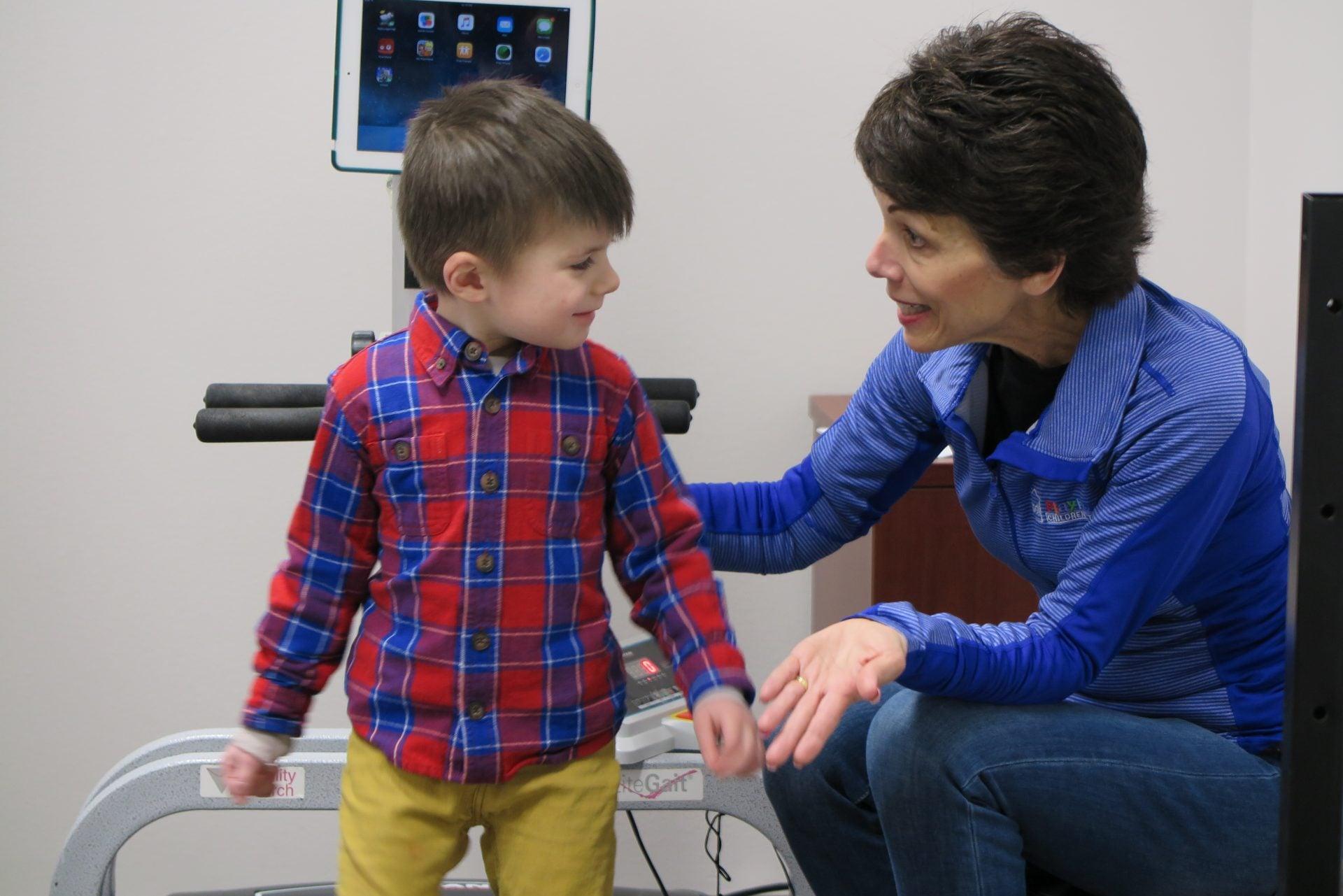
Social Language Milestones
Pragmatics is the way we use our language in social settings. For example, how to start a conversation, interpreting body language, understanding different perspectives, and using sarcasm. Pragmatic language is typically learned incidentally (learned through experience) but with some children, it may need to be directly taught. Pragmatic language begins to develop as an infant and continues to grow and form until the high school years. Below is a list of “milestones” to expect along with activities/strategies to enhance social language.
Infant (3-12 months)
- Starts making eye contact
- Reaching
- Participates in parallel play (playing next to caregiver, sibling)
- Participates vocal turn taking
- Uses vocalizations to request, protest, express feelings
Activities: Peek-a-boo, stacking blocks, waving, songs, nursery rhymes
Toddler (12-36 months)
- Imitates routines
- Imitates other children
- Uses words (12 months)/phrases (18 months)/sentences (30 months) to request, protest, express feelings
- Asks questions
- Begins at 18 months
- Initiates pretend play (ex: playing in toy kitchen, pushing trucks/cars, playing with baby doll)
- Begins at 18 months
- Takes two turns in conversation
- Begins to describe/retell events
- Begins to return/initiate greetings by waving
Activities: Ask questions during pretend play (“What’s baby doing? Where are they going?”), “sabotage” by putting toys out of reach, shared reading activities, scrapbooks to encourage retelling
Preschool (3-5 years)
- Uses language for teasing, joking, fantasies
- Starts to share with others
- Joint play with peers (participating in others play schemes, including self in play)
- Theory of Mind: Understanding that others have different beliefs
- Begins at 4 years
- Produces narratives as “chain”
- Takes 4-5 conversational turns
- Improves describing skills to repair communication breakdowns
- Begins to inference/predict
- Participates in turn-taking games
Activities: Sequence 3-4 pictures and retell story, give simple riddles (i.e., “This is an animal that lives on the farm and says ‘Moo’”), play “Go Fish” or “Bingo”
School age (5-11 years)
- Invites others to play
- Initiates conversations with familiar topics (ex: school, weather, weekend)
- Problem solving (individually and in a group)
- Begins 6-8 years old
- Gives and responds to compliments
- Tells and understands jokes of greater complexity
- Politely interrupts
- Responds to and uses facial expressions (ex: smiles, frowns, looks of surprise)
- Recognizes spatial boundaries
Activities: Practice multiple meaning words, Apples to Apples, Emotion charades, Red Light Green Light
Middle/High School (11-18 years)
- Recognizes if listener is interested or bored
- Shifts topics during lulls in conversation
- Understands difference between friends/acquaintances
- Engages in collaborative discussions
Activities: Would You Rather questions, book club, Let’s Talk Conversation Starters
If you notice delays in the way your child is using social language such as having difficulty making friends, understanding body language, or maintaining age-appropriate conversations, schedule a screening with an SLP at BDI Playhouse today!
Taggedpragmatic languagesocial skillslanguage developmentspeech therapyTurn takingbaby milestones
Related posts
When the Weather Changes, So Can Our Mood: Helping You and Your Child Brighten Up
When the Weather Changes, So Can Our Mood: Helping You and Your Child Brighten Up As the seasons change, so can our moods, energy levels, and daily routines. Shorter days, colder temperatures, rainy afternoons, or long stretches of gray skies can sometimes leave children and adults feeling less motivated, more tired, irritable, or simply “off.”
Back-to-School: Helping Children and Families Navigate the Challenges of a New School Year
Back-to-School: Helping Children and Families Navigate the Challenges of a New School Year As summer comes to an end, families begin preparing for another school year filled with new opportunities, routines, friendships, and experiences. While back-to-school season can be exciting, it can also bring feelings of stress, anxiety, uncertainty, and overwhelm for children, teens, and
Therapy for Parents: When “Do It Again!” Comes 100 Times
If you’ve ever told your child to do something… and then told them again… and again… and again… you are definitely not alone. Sometimes parenting can feel like you’re stuck in a loop, like a video that won’t stop replaying: “Brush your teeth!” “Do it now!” “Okay, one more time…” “Wait, did you hear me?”