What is toe walking?
Toe walking is when a child walks on tiptoes, without the heels touching down. It can be normal for a new walker. Many children also pop up on their toes for a few steps when excited, nervous or cold, then come back down. As walking matures, the heels should come down. When toe walking continues, it is worth finding out why.
Toe walking can have several causes, including:
- Sensory processing differences, such as sensitivity to touch
- Torticollis (a tight neck in infancy)
- A difference in leg length
- Vestibular (balance system) differences
- An underlying medical condition
- No known cause, which is called idiopathic toe walking
Over time, staying up on the toes can let the calf muscles and heel cord (Achilles tendon) get tight, which makes it harder to get the heels down.
Signs to watch for
- Walking on tiptoes most of the time, not just for a few steps
- Still toe walking after age 2
- Toe walking on one side only, or one heel that lifts more than the other
- Trouble standing with the heels flat on the floor
- Frequent tripping or falling
- Tiring quickly when walking, or asking to be carried more than other children the same age
- Pain in the feet when walking
- Strong dislike of new shoes, or sensitivity to touch
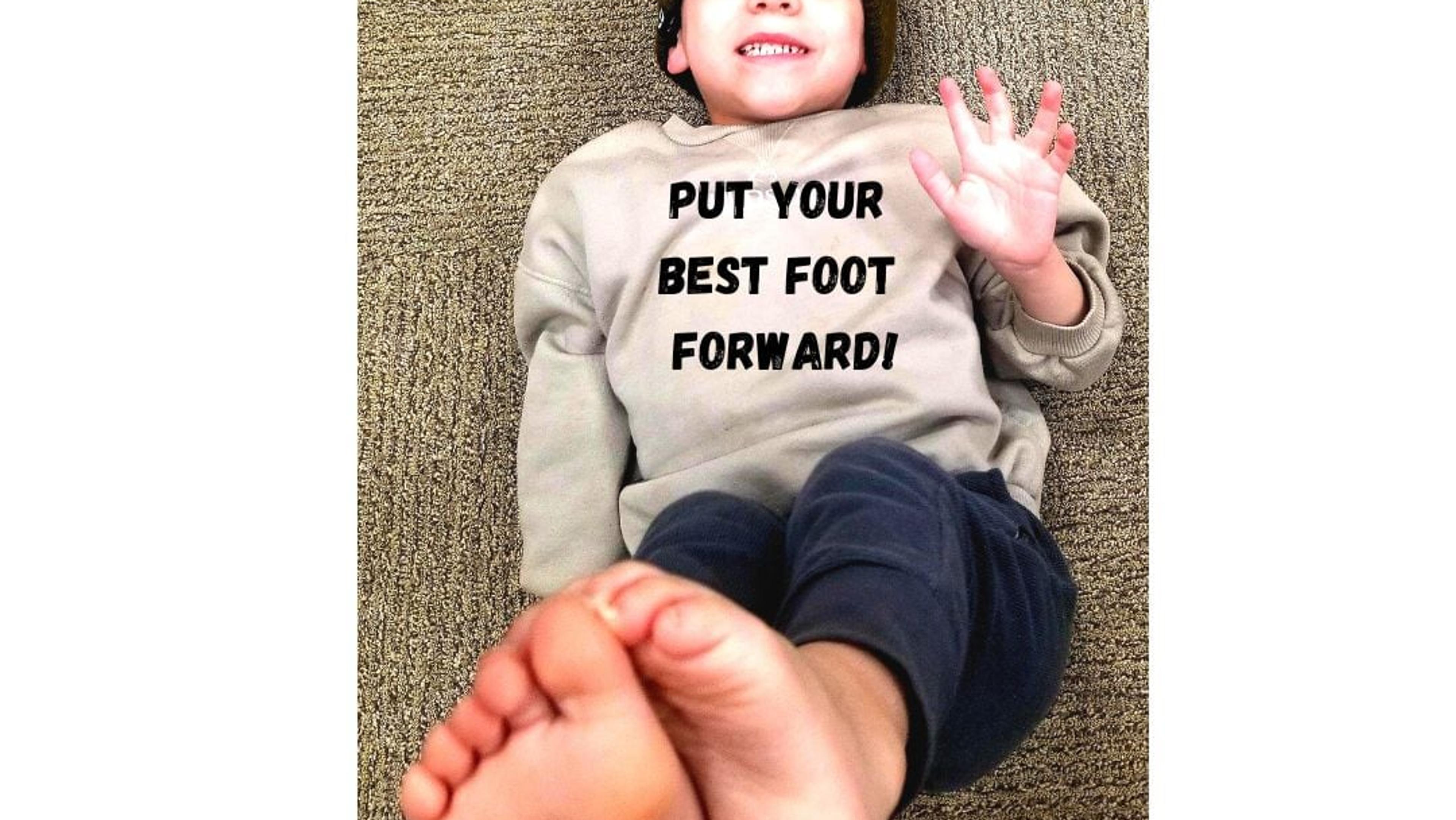
One tip from our therapists: listen to your child's steps on a hard floor. They should make an even beat most of the time. More signs are in Put Your Best Foot Forward.
When to reach out
Our guidance is simple. If toe walking continues past age 2, ask a physical or occupational therapist to take a look. Bring it up with your pediatrician too, who can check for medical causes.
Reach out sooner, at any age, if your child toe walks on one side only, has pain, has tight or stiff legs, seems uncoordinated, or falls a lot.
Our therapists find that the earlier a child is seen, the faster treatment tends to go. Early treatment may also help a child avoid serial casting or surgery to lengthen the Achilles tendon later on.
How therapy helps at BDI
The first step is finding the cause. A BDI physical or occupational therapist looks at how your child walks and moves and what may be behind the toe walking. Treatment depends on what they find, and our PTs start with conservative care.
Physical therapy can include gait (walking) training, muscle strengthening, balance training and a home exercise program. If something needs extra attention, our therapists will refer you to the right healthcare professional.
For some children, shoes or braces are part of the answer. BDI's physical therapists can check your child's alignment and recommend an orthotic during a screening or physical therapy visit. For custom bracing they refer families to orthotist (brace specialist) Gwen Ansier at Hanger Clinic, whom they consult with regularly; she is listed on our trusted professionals page.
If the ankle has become too tight, BDI offers serial casting. This noninvasive treatment uses a series of lightweight casts to gently stretch the ankle and improve foot alignment. Most children walk on the casts and keep up with reasonably typical activities. Casting does not replace therapy, which continues afterward to build a new walking pattern.
What you can do at home
- Notice when it happens: all the time or only sometimes, one foot or both, barefoot or in shoes. A short video can help your pediatrician or therapist.
- Check shoes. A favorite pair worn thin, or slip-ons, may lack support. A therapist can help you find supportive shoes, even for a child who hates new ones.
- Once your child has been seen, follow the home exercise program your therapist gives you. It is matched to the cause.
- If your child is past age 2, do not wait and see.
This guide is for education and is not a diagnosis or a substitute for care from your child’s doctor. If something about your child’s development worries you, talk with your pediatrician or call us and we’ll help you think it through.