How is a Developmental Optometrist Evaluation Different than a Vision Test?

We often hear from parents that their child “passed their eye test” which was most likely offered at school or at a well baby visit in the pediatrician’s office.  Sometimes our Occupational Therapists identify that although a child’s visual acuity test may not have shown a deficit, there are some visual skill deficits that may be present. Difficulties with vision skills often contribute to the challenges that are addressed by an Occupational Therapist, which is why we will occasionally recommend a Developmental Optometrist Evaluation. Today we welcome a guest writer to our blog from the developmental optometrist offices of Dr. Marini & Dr. Campbell to help our parents understand the importance of this referral! Dr. Marini & Dr. Campbell are two of the excellent doctors featured on BDI’s trusted professionals list who specialize in this area, have worked with us often, are eager to collaborate with us, and consistently help our kids achieve great results!

Website: Drs. Marini & Campbell Website

Facebook: Drs. Marini & Campbell Facebook

What is a Developmental Optometrist?

A developmental optometrist is an eye doctor who has more specialized training than regular optometrists. To gain the distinction of Developmental Optometrist, one must complete several extra years of post-graduate training. Like regular optometrists, developmental optometrists check acuity and health of patient’s eyes, but they also run additional tests to determine if patients have the visual skills necessary to perform tasks regularly required in daily life, especially at work or school. Due to these tests, developmental optometrists specialize in diagnosing and treating delays in visual skills, amblyopia (lazy eye), and strabismus (crossed) or wandering eyes.

When to See a Developmental Optometrist

There are certain symptoms that may be indicative of vision problems, especially in children. These include: squinting, eye rubbing, and excessive blinking. Other warning signs may occur when, and immediately after, reading. Some of the most common behaviors that are indicators of visual difficulties are: head tilting, closing or blocking an eye, headaches, dizziness, or nausea.

Besides physical clues, there are also performance-based clues, as well as secondary symptoms and specific labels that children with vision problems have. Generally, children with visual difficulties display one or more of these visual performance clues: avoidance of near work, difficulty copying from the board, and poor handwriting. When reading, these children may consistently: lose their place, have poor comprehension, omit, insert, or reread letters and words, confuse similar looking words, and fail to recognize the same word in different sentences. This can lead to the development of secondary symptoms such as: seeming smart in everything but school, as well as significant frustration, stress, and fatigue with written work, as well as a child being mislabeled as a slow learner, working below potential, or as having Attention Deficit Disorder.

If your child is displaying any of these symptoms and you would like some help specific to your child, please contact Dr. Marini & Dr. Campbell’s office to set up an evaluation or consult with one of the Occupational Therapists at BDI Playhouse Children’s Therapy to find a trusted doctor near you.

Written by: Julie Metzler, Manager of Vision Therapy

How Can I Get My Child to Talk?

Learning to talk is a complex task!  It’s no wonder some kids take awhile to get started.  Most of us think of talking as just saying words but it involves much more than that. 

Would you like to help your child say their first words? 

Try out some of these tips.

Play with your child

A child must possess certain cognitive abilities before they are able to communicate. Laura Mize, SLP and author of Teach Me to Talk, suggests building blocks to a child’s first words include the ability to understand cause and effect and comprehend object permanence. Does your child understand that their actions can cause something to happen? Playing with toys such as Jack in the Box, Busy boxes, and musical instruments will help teach these skills. Try playing games such as peek a boo, and hide and seek to build object permanence. Through these activities your child will learn that they can use words or actions to cause an adult to do something for them. 

Engage your child

In order for a child to imitate your words or actions, you must be able to get their attention. You can gauge your child’s ability to attend by answering the following questions: Does your child attend to your face? Will your child try to play with you? Does your little one enjoy being with people?

It is necessary to get your child engaged before you begin to model gestures or words for them.

Look for things they are interested in and follow their lead. Get down on their level, use exaggerated facial expressions, try a sing -songy voice, and exaggerate your actions so you are impossible to miss! 

Imitation

Copying movements and sounds is one of the most important steps for developing words.  Start with getting your child to imitate movements (i.e. waving, clapping, banging on objects, throwing a ball).  Pair a sound with an action; such as “boom boom while hitting a drum, or “whee” when going down a slide. These types of copying should eventually  lead to imitation of real words and phrases. 

Baby signs

Signs have been shown to help reduce a child’s frustrations, build bonds between parent and child, and bridge the communication gap before your child is able to talk .  Signing will not deter language development.  Choose baby signs that are functional and versatile such as “milk”, “eat”, “mom”  and “dad”.  Keep in mind that just as kids’ first words don’t always sound perfect, neither will their signs be perfect.  Reward their efforts!

Model appropriate language for your child

Children typically learn the meaning of words before they say the word.  Talk to your toddler throughout the day using simplified language to label objects, and to describe what’s  going on around them. Imitate their attempts to “talk”,  to teach them the back and forth nature of communication.

Read to your child

Reading to your child will help build key language skills.  Choose books with large, colorful pictures and actions.  Label each word while pointing to each one. Help your child to begin pointing  to them as you read.  Choose books that have predictable text such as Brown Bear Brown Bear. or 5 Little Monkeys Jumping on the Bed and omit predictable words, giving your child an opportunity to “fill in the blank”. 

If you continue to have concerns about whether your child’s language is progressing appropriately, BDI Playhouse Children’s Therapy,  offers free screenings by certified Speech-Language Pathologists.  Check out our website for Parent and Child Classes, which  provide a fun learning environment for you and your child to practice new language strategies.


Written by: Sheila Trout M.A.; CCC-Speech-Language Pathologist

Oops!
This appointment does not exist.
Child in a speech therapy session with therapist

Language Development in Children

Language development is a key component of childhood.  We are teaching our children the rules of language from the moment they are born.  But what should you do if your child is not crushing their language milestones?  When families come to Talk and Groove or for a free screening at BDI Playhouse, our speech language pathologists often send them home with a few tweaks to their home environment before recommending an evaluation.  None of our recommendations require purchasing of toys or materials because we want it to be a natural part of your routine!  Here are the top 3 recommendations we make!

Withhold

Withholding highly motivating items is a common strategy used to encourage language development through requesting.  There are many ways children can use body language to request an item.  Children can communicate a request through simple eye gaze, pointing, and dragging you to the item they want.   However, what happens when a child cannot get past pointing for something they want?  We withhold.  Withholding the desired object sets you up to model and have your child request the item, through verbalization or sign.  However, the key is to read your child for the best opportunity to do so.  If your child is already “edgy” or “on the brink of a meltdown”, now is not the time to withhold in order to teach your child to use a sign or verbalization.  We have the rule of 3 tries.  Let your child try to imitate 3 times before moving back to an easier attempt to avoid frustration.  For example, if you child has progressed to sign cookie and you are trying to get her to say “cookie”, after 3 tries, accept the sign and try again later!

Sabotage

This is a pretty harsh word for a fabulous technique but the word gets a lot of giggles out of our parents.  Sabotaging your child for language development means taking an everyday activity and letting your child problem solve using language.  An example of sabotaging your child would be to only give them a few cheerios in order to create the opportunity to ask for “more cheerios”.  Another example would be to put their favorite toys inside a clear box or bag that requires assistance in “opening”.  The beauty of sabotaging is that you can start with simply signing open all the way to creating phrases and sentences “Mama, open the box please”.   

Take a trip

As much as we wish that this tip means you should get on an airplane and fly to Europe, it truly is as simple as taking a trip outside of your “normal day”.  Think about your day-to-day life and all that your child is exposed to.  Now, think about a “trip” that could be new.  It could be as simple as walking to a different neighborhood and watching for dogs.  Take a trip to a pond and see if there are any ducks.  Drive around looking for buses and trucks!  

Language Development is such an amazing experience to witness and be a part of.  We are eager to see if these 3 techniques were successful for you and your child!  If you would like some more personalized ideas or need additional help with putting these techniques to use, please reach out and schedule a free screening with one of our skilled Speech Language Pathologists.  We’d love to be a little part of your journey! 


Written by Jessica Keenan, MA, CCC-SLP/L, CLC


Busting Behavior Challenges: Behavior Management Strategies

Behavior.  Something sets off your child, and the screaming, throwing, crying, or hitting behavior begins. We have all been there. Your panic rises. Somehow, you make it through the moment and on to the next, but there may be chaos left in the wake of the meltdown as a result of negative behaviors. Occasionally, negative behaviors become more than occasional. When your child is displaying persistent negative behaviors, there are a few strategies you can take to get back on track.

Sensory Strategies:

Addressing the sensory system is a powerful tool in behavior management and redirection. Engaging in these strategies throughout the day can be a preventative means of managing behaviors, where as bringing these strategies into the moment can assist in calming down an escalated child.

    1. Wiggle Jiggles:

      Have your child lay on the floor on their back.  Take hold of the child’s feet and push the feet towards their head/pull towards you. This shifting will cause the head to bounce slightly up and down in an organizing bobbing movement. This also allows pressure to be applied to the spinal column and joints in the legs in a rhythmic manner

    2. Squeeze something:

      Playing in putty, play dough, slime, stress balls (store bought or homemade!) allows for compression of joints and tension release. 

    3. Turn down the lights:

      Bright light wakes our system each morning. Dimmed lights/darkness calms us each night. You can dim lights or move your child to a darker space to reduce stimulation. 

    4. Declutter the environment:

      Having too many things around can be distracting or overwhelming for children.

    5. Stomp your feet:

      Get quick input by a simple movement such as stomping your feet or performing animal walks (bear crawl and crab walk).  

    6. Play quiet/wordless background music:

      Keeping an environment calm with music is a simple way to facilitate play and organization throughout the day. These can include classical music, tones/white noise, or piano versions of favorite songs.

    7. Lotion/Scents:

      Putting scented lotion on yourself or the child, or spritzing scented sprays/lotion can be a preferred way to calm the sensory system and maintain mental clarity.

    8. Chew something:

      Gum, crunchy or chewy snacks such as apples, carrots, celery sticks, thick rod pretzels, trail mix, or thick smoothies/milkshakes through a straw allows for the management of our taste buds and behavior.

    9. Provide a safe/quiet place:

       A safe place or quiet space can be found in a back seat of the car, a tent, a closet, a corner with bean bags, or anywhere that is enclosed. When overwhelmed, a child benefits greatly from having space to themselves to decompress.

    10. Join a class: Movement and engagement throughout a child’s day is extremely valuable.  Sign your child up for a community class such as gymnastics, swimming, karate, or soccer will get the muscles moving and the body calm!

Behavior Strategies:


Managing behavior through reinforcement and consequence strategies can be very effective for young children that are prone to outbursts or misbehavior:

    1. ABC Charts:

      Charts help document and remain objective about what behaviors we observe.  ABC charts help us determine the cause of negative behaviors. Write down the antecedent (A) what happened before the behavior, the behavior (B) in detail, and the consequence (C) that followed the behavior. Having this data allows us to develop the most effective intervention for behavioral challenges.

    2. Schedules:

      Visual (Picture) schedules or verbal schedules given throughout a day help provide guidelines for the day’s events or task expectations. This allows the child to understand what the day or activity will entail. It also allows the child to process what the day/week/month will hold so they can prepare themselves, their bodies, and their abilities.

    3. Countdowns/Timers:

      Using a timer allows the child to understand with warning that an end to a task is coming. The preparation a child can do mentally when forewarned about a transition will increase ease of moving on to the next thing!

    4. Behavior charts:

      A child benefits from a clear goal.  This can be achieved by giving a child direct and concrete feedback about their performance through a “behavior chart”. 

    5. Having a job:

      Give a child something special to do (teacher helper, passing out papers, retrieving a special item, making something specific). This gives children ownership in their actions and helps keep behavior on track! 

    6. Working for….:

      When we find that “Just-right” motivation for a child, we can allow them to work and behave accurately to achieve the motivating item/action! 

    7. First/Then:

       “First this activity, Then that activity” strategy tells a child clearly and completely what the expectation of behavior is and doesn’t allow for questions or confusion. 

    8. Rewarding positive behavior:

      Providing your most engaged, thrilled, and enthusiastic praise to your child for the behavior you expect and appreciate, with clapping, cheering, smiling, hugging, etc. will encourage your child to perform at their best again and again!

    9. Clear expectations of desired behavior:

      When telling a child “STOP behavior!”, they may only hear or process the behavior you have highlighted, and/or may not completely understand what you are asking of them. Rephrasing corrective statements to “Do” instead of “Don’t” actions can be helpful. For example, instead of saying “Don’t dump the cars out of the bucket!”, tell them “Keep the cars in the bucket”. Or, instead of staying “Stop running!”, tell them “Use your walking feet!”.

    10. Remain calm (Yourself!):

      Finally, the most important thing you can do when you encounter negative behaviors is to keep yourself in a calm state. As our level of excitement/frustration increases, so does our children’s. This causes us to lose our ability to correct with a clear and sound mind. Taking a deep breath, finding our center, and taking a moment to calm ourselves is often the most important step in the path to managing negative behaviors.

Managing challenging behaviors can be extremely difficult, but achieving success in this area can be life changing. If these strategies are not proving to be effective enough to get your days back on track, please contact BDI Playhouse Children’s Therapy for a free consultation to get your child out of the behavior blues!

Written By: Margaret Lord, MS, OTR/L


No Fields Found.

How does Posture Impact Scoliosis?

Scoliosis

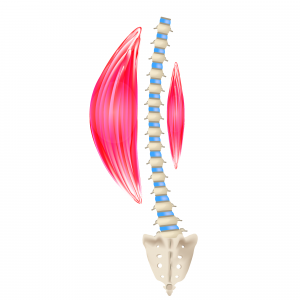
Scoliosis is a curve in your spine that visually appears to move from side to side. A common misconception is that a scoliosis curve is 1 or 2-dimensional. It actually occurs through a 3-dimensional curve with changes in the bones at the apex of the curve. This 3-dimensional shape is seen all throughout the body! It is similar to the 3-dimensional shape that allows your hips and lower back to move in separate directions. These 3-dimensional changes occur all the way from when and how your foot contacts the floor to how your head and neck are positioned.  

Impact of Scoliosis in Children and Teenagers

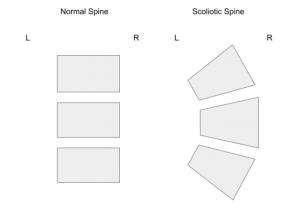
Children and teenagers who have scoliosis will notice that these changes impact their posture and how they move.  Normally, the bones in the spine are rectangular and are evenly spaced from side to side. Children and teens who have scoliosis will have at least three bones in their spine that are larger on one side than the other. This is what contributes to the shape of the spine.   

Due to structural and postural abnormalities associated with scoliosis, it is important to maintain an upright posture and to avoid repetitive bending and twisting at the spine.  If your child maintains poor posture or rests into their curve, they can experience back pain and their curve may even worsen.   This will also cause more rotation of and stress on the bones of the spine. Your child or teen will need to maintain a neutral pelvis and upright posture.  This will prevent the worsening of scoliosis and overall posture.  A skilled Schroth-certified therapist can create a customized treatment program to help them learn how to use healthy posture and movement habits during their everyday activities.

Importance of Posture

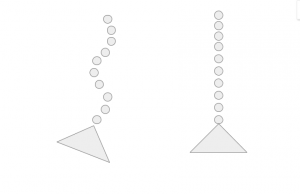
So why is it important to develop and maintain a neutral posture? Think of a spine and the way it moves like a broken pearl necklace like in the image below. In this picture, the pelvis is the triangle and the spine is the string of pearls. Without a stable pelvis, the bones in the spine follow the path of least resistance and move further into a curve like when you drag the end of a pearl necklace and all the beads follow the path of the first bead.

However, if you take the end of the pearl necklace and hold it with one hand and then pull the other end with the other hand the pearl necklace will straighten. The same thing will happen when you learn to find a neutral pelvis and work on lengthening your spine with an upright posture.

Physical Therapy for Scoliosis

At BDI Playhouse, a Schroth-certified physical therapist can work with you and your child to learn ways to improve their posture while playing, doing sports, socializing, and during everyday activities at school and home. Schroth-certified therapists have special training to help children incorporate good posture into their everyday activities. This will stop curve progression, improve physical appearance, and improve health and functional abilities. We can work with you and your child to achieve any goal through the development of a healthy posture. To learn more about how we can work together to make those goals a reality, schedule a free screening  or call us at (708) 478-1820. 

No Fields Found.
Scoliosis exercise

Movements to avoid: Modified exercises for Scoliosis

Children and teenagers with scoliosis have changes in the alignment of the curve of their spines. Changes in the spine impact how the bones slide over each other when moving during day to day activities.  In addition, changes in the ligaments and muscle length result in the spine moving further into the Scoliotic posture when bending, extending, and rotating the spine. People with scoliosis should avoid these movements when possible. Repetitive movements into these postures can cause the curve to worsen during periods of growth. Children and teenagers are constantly growing which makes childhood and adolescence critical periods for ensuring proper movement and posture.

Functional movements that children and teenagers commonly perform that result in increased bending and rotating at the spine include: picking up/carrying objects, squatting, and doing stretches and core exercises. For children and teenagers, it is important to avoid these movements while playing, doing sports, socializing, and during everyday activities at school and home. A Schroth-certified physical therapist can help to make movement and posture modifications in order to bring the spine to a more natural position. They are trained to help children and teenagers learn safe movement and posture habits so that they can use them every day.

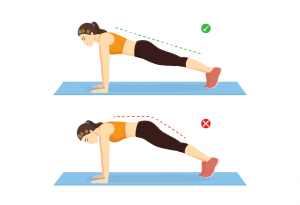
Children and teenagers with scoliosis should avoid exercises like sit-ups. They should also make sure to maintain a straight spine when performing other movements and stretches.  Other modifications include having your child bend their legs instead of their spine when picking up objects. They can do this by squatting down or kneeling on one knee when picking up something off the floor. Further, a Schroth-certified physical therapist can create a customized treatment plan that can address specific activities or sports that your child loves to do so that they can continue to participate in the safest way possible.

Stretching is still possible for your child or teenager, but it is important they try to keep their neck extended and maintain a straight spine. They can also perform stretches on their back when possible.  If your child’s head is flexed (bent down) the rest of their spine will follow this harmful posture and the spine may be progressed into a more curved position. 


Core Exercise Modifications


                    • Prone planks


                    • Bird Dogs


                • Leg lifts/lowers while laying on back


If your child or teenager has scoliosis, they can still excel in the sports and activities they love. They will just need to learn a few modifications to help maintain a healthy spine. Using the Schroth Method for scoliosis, physical therapists at BDI Playhouse can work with you and your child to achieve any goal while learning safe ways to perform certain movements. To learn more about how we can work together to make those goals a reality, schedule a free screening or call us at (708) 478-1820. 


I can wash my hands all by myself!

Is your child having trouble washing his hands by himself? Is he not thorough when washing hands? Or, would you like your child to wash hands independently? Teaching your child how to wash their hands can be accomplished in a few easy steps!  The important thing to remember when teaching any hygiene routine is to make it fun and model the action yourself!  The more they watch you do it, the more they will want to do it too!

First, make hand washing fun! Get some fun soap, make it a game, and sing a little song!  There are some fun songs on YouTube that you can memorize and sing along with your child or just make one up!

Tell your child they are germ busters when they wash their hands well. No germs will spread because I busted them up! 

Create a handwashing procedure and place it in the bathroom for your child to use. You can print this one if you like. Steps for hand washing.

  1.  Turn warm water on and wet hands.
  2. Lather up! Grab your fun soap and make tons of 
  3. Sing ABC’s or Happy Birthday while scrubbing to get rid of all the germs.
  4. Rinse those bubbles off your hands in warm water! See ya later bubbles! Turn the water off.
  5. Dry hands really well! All done! You did it! You busted all those germs! Yeah!!

If your child has a hard time implementing hand washing into their day and you would like some additional help specific to your child, please contact BDI playhouse to set up a free screening.

Written by: Jessica Frederick, OTA

Improve Children’s Posture – 5 Easy Exercises

Caregivers can help improve children’s posture by encouraging exercise! Children’s posture is influenced by injury, weakness, genetics, and daily habits. Slouching on a couch playing video games, carrying a heavy backpack, a sports injury, or bones misalignment can all impact proper posture. It is important to promote a good posture at a young age in order to prevent further injury, pain, and avoidance of activities that were once enjoyable to your child.

Here are 5 exercises to improve children’s posture:

1. Bridges

This exercise strengthens glutes and low back muscles to improve children’s posture. Make sure to complete repetitions slowly. Also, lift buttocks during inhalation and lower them during exhalation. During exhalation, you can have your child count out load from 1-5 or blow out. 


pastedGraphic.png

2. Reverse abdominals

This exercise strengthens the abdominal muscle group, which is also key to improve children’s posture. Make sure to complete repetitions slowly. Also, lift feet during inhalation and lower them during exhalation. During exhalation, you can have your child count out-load from 1-5 or blow out. Avoid excessive arching of the low back during the exhalation phase.

pastedGraphic_1.png


3. Superman:

Strengthens upper and low back muscle, glutes, and hamstrings. Have your child hold the position for 10-30 seconds while simultaneously counting out-load or singing a song.


pastedGraphic_2.png


4. Down Dog Yoga Pose:

Strengthens core, hip, and shoulder muscles. In addition, assist with stretching, flexibility, and relaxation. Have your child hold the position for 10-15 seconds and avoid breath-holding.

5. Animal Walks:

Bear walks, crab walks, and frog jumps are just a few examples of fun and dynamic animal walks that can be incorporated into any activity to assist with core muscle strengthening.

If you find it is difficult to improve the child’s posture after trying these exercises, therapists at BDI Playhouse are here to help your child get stronger, learn healthy habits, and avoid further complications such as pain. Please contact us for a free consultation.

pastedGraphic_3.png

pastedGraphic_4.png

Written by Keishla Gonzalez-Acosta, MSPT, DPT

No Fields Found.

Considering E-Learning Summer School? Find success with 3 simple tips!

Did you have trouble juggling your kids’ e-learning, your job, and the other many responsibilities that come with being a parent? Well, you’re not alone.  Do you want your child to do summer school but don’t know if you want to commit to more e-learning?

Here are 3 easy tips to help you and your child maximize the benefits and your time while completing E-learning activities. 

1. Start off your day by making a realistic schedule for what you want and need to accomplish. And don’t forget to let your kids help! 

  • Allowing your kids to have a say in what their day will look like will give them a sense of ownership, making it more likely for them to stick to it. Depending on the child, it can be as vague or detailed as you’d like. 
  • This schedule will set the expectations for what you and your kids will accomplish but also provides a set of boundaries. 
8:00 am

9:00 am

11:30

12:15

1:003:304:00 5:15 6:30 
Breakfast / free playE-learning with movement breaks includedOutside time / free playLunchE-learning with movement breaks included Go for a walkLast E-learning activities of the day!Help mom & dad with dinner / Free playDinner


2. Set up your environment for success for e-learning!

  • Pick 1 place in your house where school work will take place every day. This way your kids’ brain knows when it’s time to work and when it’s time for a break. No one wants to be thinking about their math homework while watching their new favorite show on Netflix. 
  • Provide proper seating that creates a productive posture for learning! Hips, knees, and ankles should be at 90-degree angles. 
  • Try to pick a place that offers natural light! Place the light behind the workspace so the light isn’t distracting. 
  • Minimize distraction by turning off the phone or placing it on airplane mode. 

3. Take a movement break! Lots and lots of movement breaks!

  • Movement breaks are extremely valuable. Scientists have found that the average learner needs a movement break every 20-30 minutes. 
  • The area in our brain responsible for memories is known as the hippocampus. The hippocampus processes information and creates long term memories, but this can take time! Movement breaks give our brain a chance to process what we just learned and turn that information into a long term memory. Without breaks, our hippocampus can get overwhelmed and miss out on information that we intended to remember. 
  • Physical activity increases oxygen to the brain, which in turn enhances our ability to focus and learn. 
  • Movement breaks can reduce stress, anxiety, and offer a quick sensory break allowing our kids the time and space to regulate their mind and bodies.

What might a movement break look like for e-learing? 

  • Set a timer to go off every 20-30 minutes
  • Start a new timer for 3:00-5:00 minutes (This app is a hit)
  • Pick your exercises
  • Turn up the music and get to moving!

*You can add challenges to make it more difficult such as doing the movement backward, faster, or slower.

Example:

Break #1Bear walks & Jumping Jacks
Break #2Crab walks & Somersaults
Break #3Sit-ups & Bunny hops
Break #4Frog jumps & Log rolls
Break #5Free dance! 
Break #6 Wheelbarrow walk & wall push-ups

Struggling with E-learning

E-learning is new for everyone, so don’t be too hard on yourself if it isn’t going as smoothly as you anticipated. Implement these 3 tips to maximize the benefits of your E-learning experience!  If you want some additional ideas, specific for your child, please schedule a free screening with one of our therapists!

Written by: Katie Estey, OTR/L

No Fields Found.

Why Tummy Time is Important

Why Tummy Time is Important

Tummy time is important for your baby’s development. Here are the top 7 reasons why you should be incorporating tummy time into your baby’s routine.

1.  Strength

Spending time on her belly is important because it strengthens the neck, back, shoulders, hips, arms, and hands.  It will help to increase the range of motion / stretch tight muscles in the neck, hips, and abdominals. 

2.  Coordination and Body awareness

Your baby will learn about her body in a different position and experiment with how to work with and against gravity.  She will learn to pivot (reaching and pivoting are precursors to crawling), balance, and increase postural control.  By increasing coordination and body awareness, your baby will also initiate hand-eye coordination with reaching, hand grasp and release.

3.  Prevention of flat spots

The more your baby is on their tummy, the less likely the back of your baby’s head will develop flat spots (positional plagiocephaly).

4.  Acquire gross motor skills 

The more waking hours spent on their tummy, the earlier babies will roll over, push up on arms and crawl (Dr. Karen Adolph, director of the NYU Infant Action Laboratory). Tummy time also strengthens extensor muscles which will lead to better sitting skills and postural control of your baby. 

5.  Sensory exposure 

Lying on their tummy lets babies feel different textures on their arms, hands, and cheeks.  This helps grow their touch sense and helps develop movement and balance (vestibular sense).

6.  Vision 

Your baby will experience the world from a different perspective during this time.  It allows your baby to see things both near and far.  It also helps them develop eye and hand coordination.

7.  Aids in digestion and reflux.

Sometimes despite your best efforts, babies continue to resist spending time on their tummy. History of reflux, a slightly misshapen head, muscle asymmetries such as torticollis, and other challenges may require additional problem solving to improve tolerance to being placed on the tummy.  Don’t give up! This position is critical to developing and achieving motor and cognitive milestones. We can help you figure out how to improve tummy time. Try our free Infant Massage Classes or call for a free screening to see if there is more we can do to promote healthy infant mobility. 

If your child resists tummy time, is developing a flat spot, is unusually fussy, often looks to one side, or holds his head to one side, or you have any other questions about development, don’t hesitate to give us a call.  BDI Playhouse Children’s Therapy offers free screenings and consultations through Telehealth or at one of our child-friendly therapy gyms in Orland Park and Aurora, IL


No Fields Found.